Snow & Wind Discover life in nature

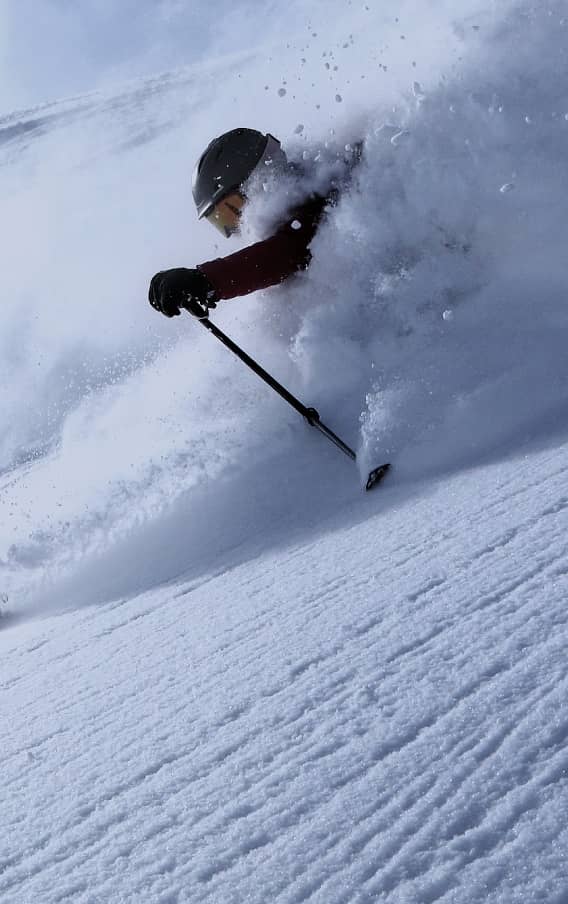
Snow Photo: ©︎aaron_jamieson_

A Life that Parallels
the Changing Seasons from Snow to Wind

Discover life in nature

Travel to Niseko.
Flowers budding in spring,
cool breeze blowing
from the mountains in summer
The mountains turn red in the fall,
and powder snow falls in the winter.
In the midst of vast nature,
you can experience the beauty
of Japan’s four seasons.

In addition to admiring the scenery,
Through encounters with the people
who live in that landscape,
and their culture and sensibilities,
A special experience awaits you
to discover the joy of living with nature.

The time you spend each time you visit
deepens your connection
with nature and people.
May this place eventually
become your second home.

Travel to Niseko.
Travel as if living with nature.

Nature

Photo: ©︎aaron_jamieson_

Photo: ©︎toshi_pander

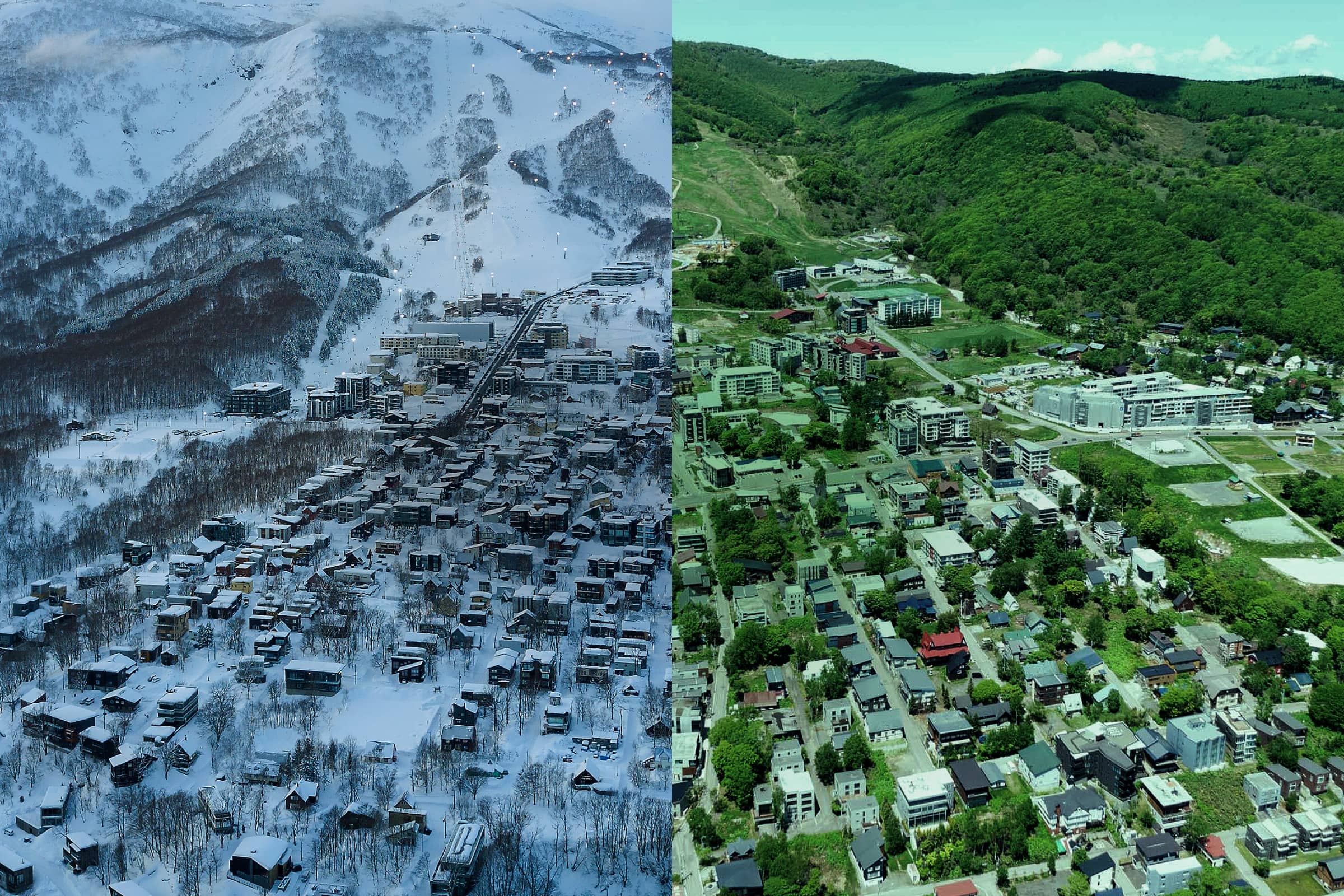
Niseko has a rich variety of faces throughout the year.
Created by natural processes that have been going on since time immemorial
A relaxing time awaits you.
Let’s visit not only the snowy scenery but also the scenery of each season.

Nature

01

Niseko’s vibrant
seasons unfold.

Depending on the time of year you visit,
Niseko’s nature welcomes you with a completely different appearance depending on the time of year you visit.
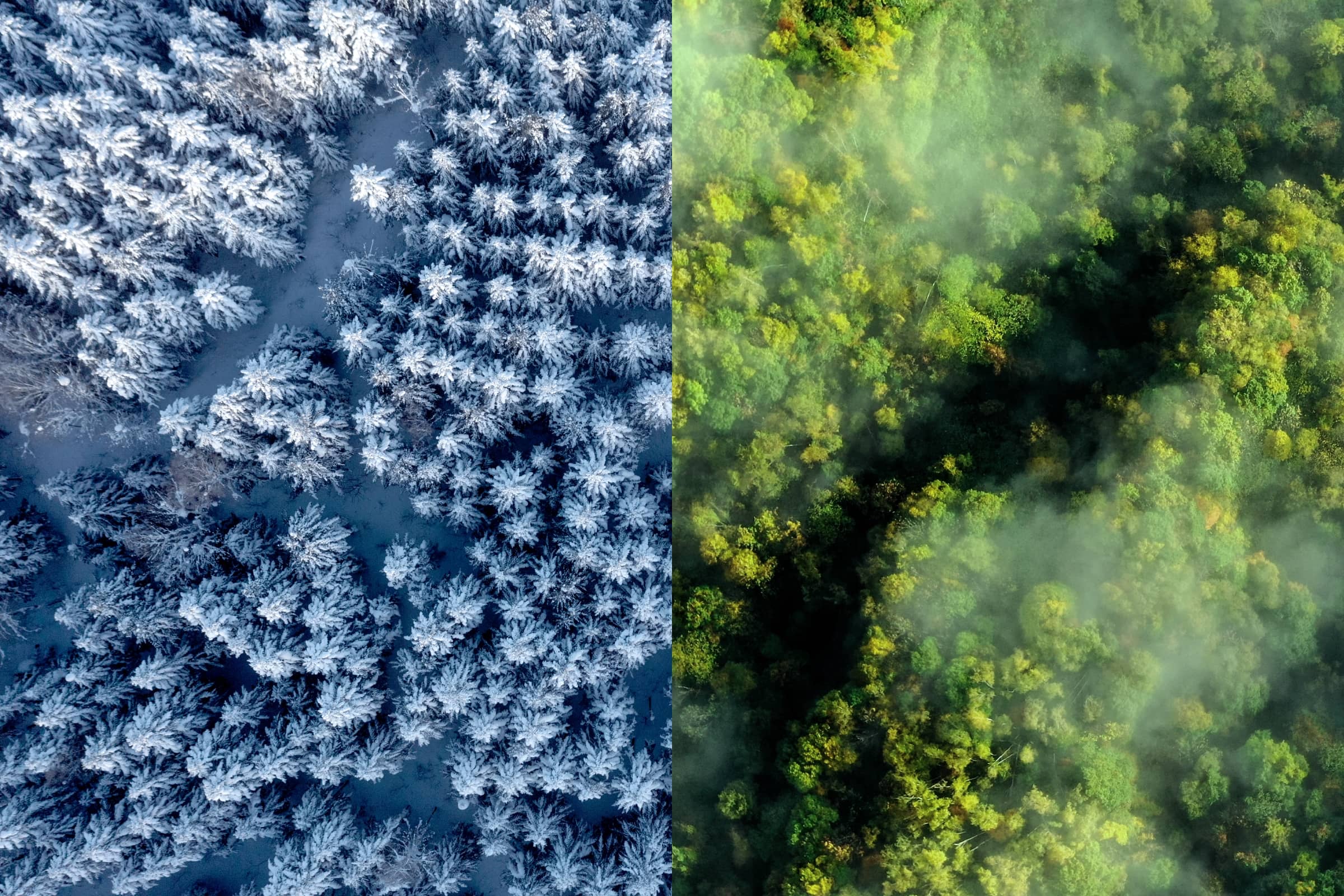
The difference in temperature between winter and summer gives the seasons their distinct contours,
The four seasons are distinctly Japanese.

Discover life in nature

Scroll

Spring Bursts with Color

As the days lengthen and the harsh cold eases, Niseko also shows signs of spring. The pure white landscapes transform drastically with the snow melting, reviving the flowers hidden underneath and coloring the land with radiant life.

Kagami-Numa

The contrast between lingering snow and fresh greenery can only be enjoyed at this time of year. At Kagami-Numa, you can take in the view of the remaining snow on the mountains while exploring the alpine plants in full bloom

Mishima’s Shibazakura Garden

Mishima’s Shibazakura Garden, which Mr. Mishima has graciously opened to the public, is best from late May to early June. This site spanning about 4,000 square meters is blanketed in pink.

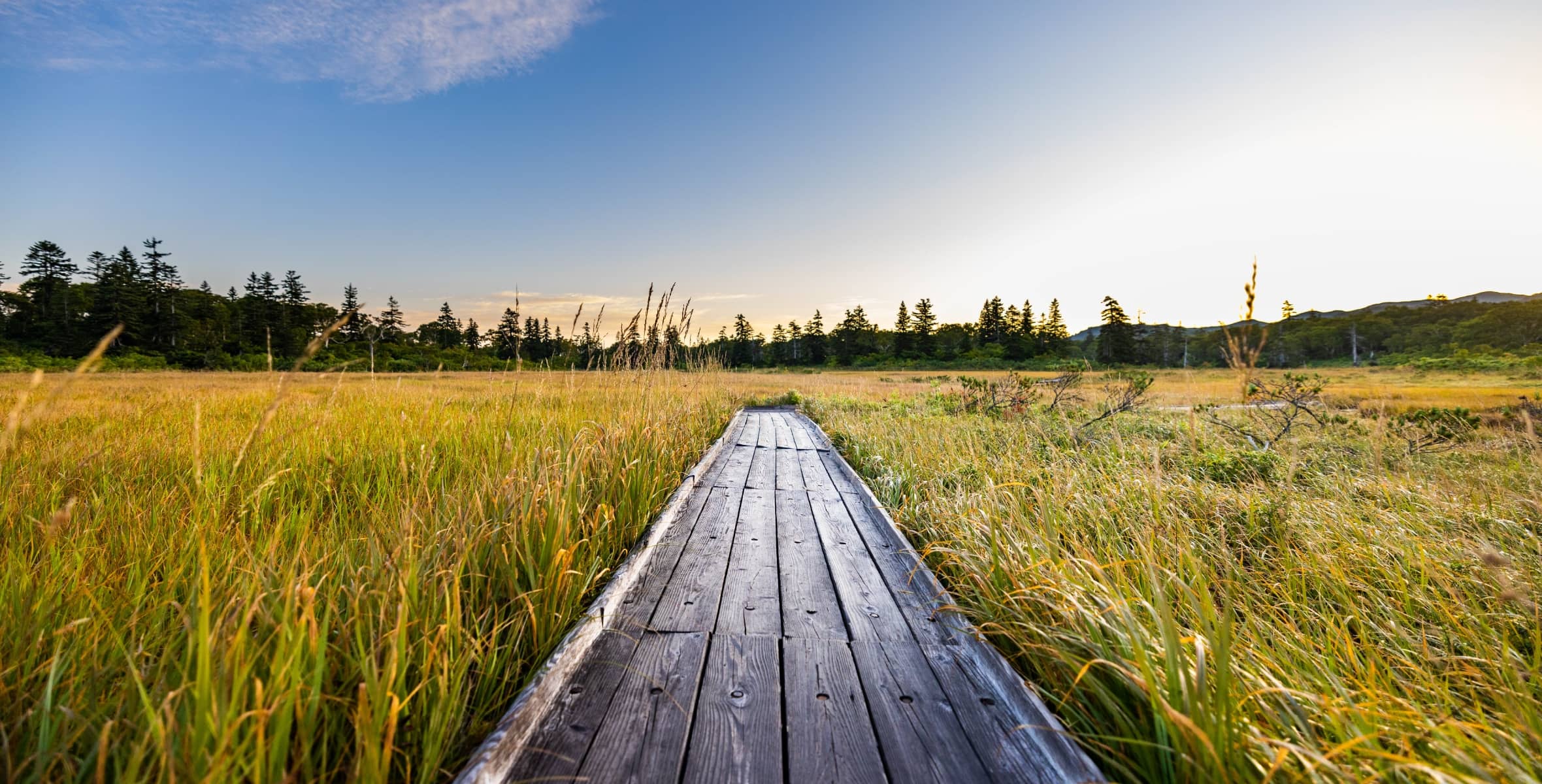
Summer Overflows with Lush Green

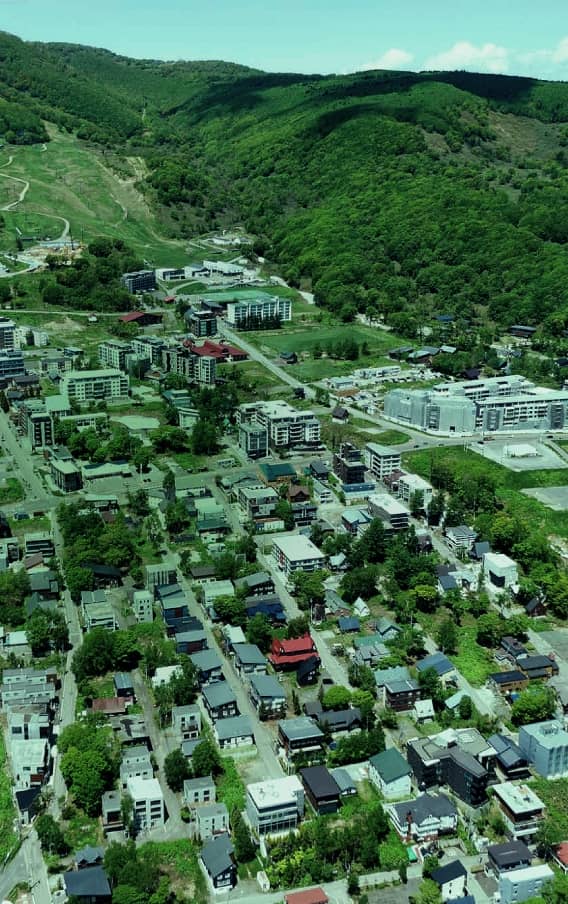
Summer in Niseko offers cool temperatures and low humidity throughout the day, making it an optimal time for those wishing to escape the heat. Nature embraces this short summer season with added vigor, beckoning the adventurous spirit of the visitors that accompany the refreshing climate.

Shakotan

From Niseko, drive an hour and a half to discover the deep blue sea of Shakotan. It is well worth checking out this spectacular view of what is known as “Shakotan Blue” and the strangely shaped rocks in the dazzling summer sun.

Niseko Annupuri

This scenery of Niseko Annupuri that delights skiers during the winter also undergoes a striking transformation from white to green. The grass and trees shimmer as a gentle breeze sweeps across the highlands.

Coloring Autumn

After a short summer, the leaves begin to turn red and yellow around the end of September, a little earlier than in the main island of Honshu. With nature nearby, just a short walk allows you to revel in deepening autumn colors enveloped in hush stillness.

Hangetsu Lake

It is a 15-minute walk from the parking area to the shores of Half Moon Lake (Hangetsu Lake), which is said to have taken a half moon shape due to volcanic activity. You can take a stroll through this fantastic landscape, where trees turned red and yellow are reflected onto the lake’s surface.

The Niseko Panorama Line

The Niseko Panorama Line connects Niseko and Iwanai. You can enjoy taking in the autumn foliage of the Niseko Volcanic Group as you drive through the ever-changing topography.

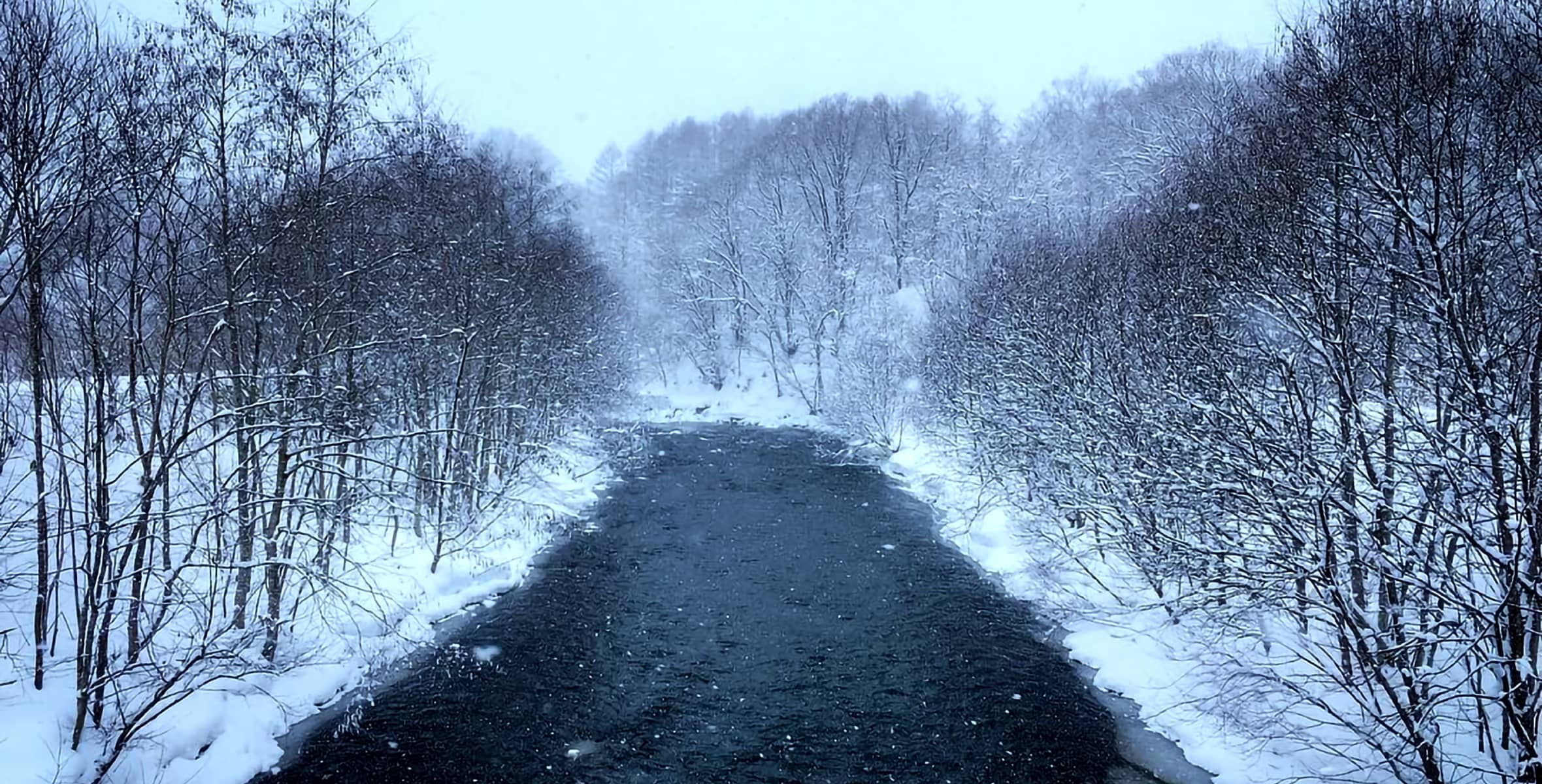
Winter Covered in Pure White

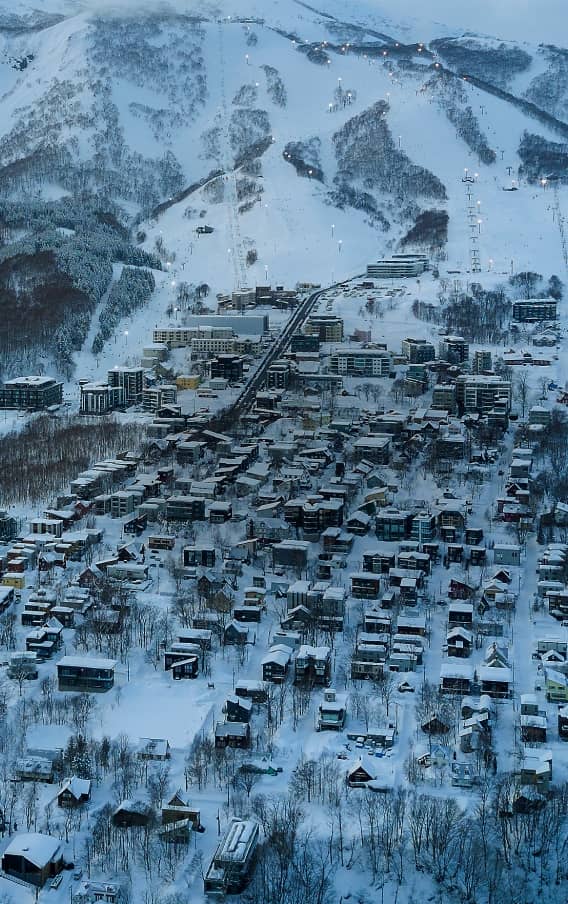
When the first snow is observed with the dramatic drops in temperature, it means that full-blown winter is just around the corner. More powder snow continues to fall almost every day, turning the whole area into a pure-white winter wonderland.

Mt. Yotei

Niseko’s symbolic Mt. Yotei is also blanketed in snow. From atop the ski slopes opposite this, you can take in the spectacular views of the expansive winter wonderland.

Lake Toya

Lake Toya, the third-largest caldera lake in Japan, which at its center features Nakajima Island covered in snow, its mystical appearance is beautifully reflected on the pristine waters.

Nature

02

Water Tour from
Sea to Mountain

Powder snow continues to attract skiers from all over the world. Rain drenches the earth.
This then enriches the mountains, flows into rivers, and eventually returns to the sea.

Discover life in nature

Scroll

Snowfall Brought on by the Topography
and Surrounding Environment

With an annual snowfall reaching 15 meters, Niseko is one of the snowiest areas in the world. The extremely cold air from Siberia causes snow clouds to form as water vapor is absorbed from the warm Tsushima Current flowing through the Sea of Japan. This moist air comes to the Niseko Volcanic Group, where it then cools as it drifts up the mountains and turns into heavy snowfall.

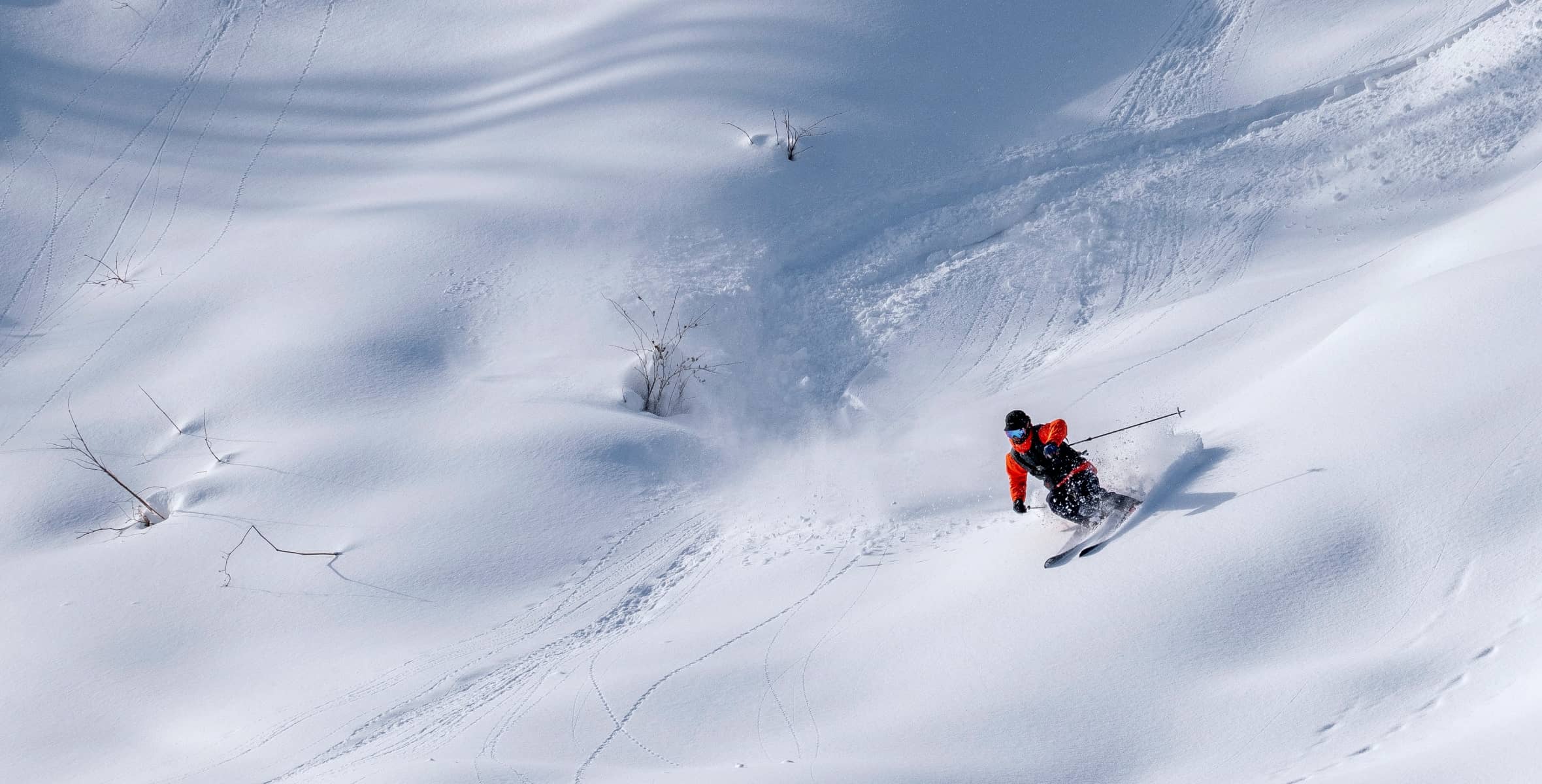
Abundant snowfall and cold climate produce the powder snow. Its low water content makes for extremely light snow so fluffy that it will jump into the air just by walking on it.

Last season saw 26 consecutive days of snowfall from December 2023 to January 2024.

Water Purified over Decades

Snow that piles up over the winter becomes an essential water resource for the natural environment. Particularly at Mt. Yotei, also known as the home of beautiful water, rain and snow soaked into molten rock and volcanic ash is filtered as it permeates underground over decades. It wells up to the surface at the boundary between the molten rock and layer of clay at an altitude of about 250 meters.

This spring water, in which just the right amount of calcium, magnesium, and other minerals have dissolved, maintains a constant water temperature throughout the year, making it mild and super-soft.

Fukidashi Park in Kyogoku Town is the most famous spot for spring water. It boasts one of Japan’s largest sources of spring water, producing about 80 thousand tons per day.

Collected Spring Water Flows
Toward the Sea of Japan

The Shiribetsu River has its source at Mt. Fure. Shiribetsu River, which is said to derive from the Ainu words “Sir-peh” (literally, descending along a mountain-river), collects the abundant water that well up along Mt. Yotei and flows out to the town of Kutchan before eventually reaching the Sea of Japan. The water cycles back to snow, blanketing the mountains of Niseko.

Recognized as Japan’s most pristine river seven times by the Ministry of Land, Infrastructure, Transport and Tourism, Shiribetsu River’s transparency and water quality are among the best in Japan.

This river’s favorable environment nurtures a diverse range of fish. The rainbow trout raised in this snowmelt water are also popular among local anglers.

People

Lifestyle interviews with the people of Niseko,
embraced by nature’s gifts.
They reveal the magic of the area,
known only to those that call it home, and
share hidden gems and travel tips to elevate your visit.

People

01

Enjoy Nature
Without Depleting It

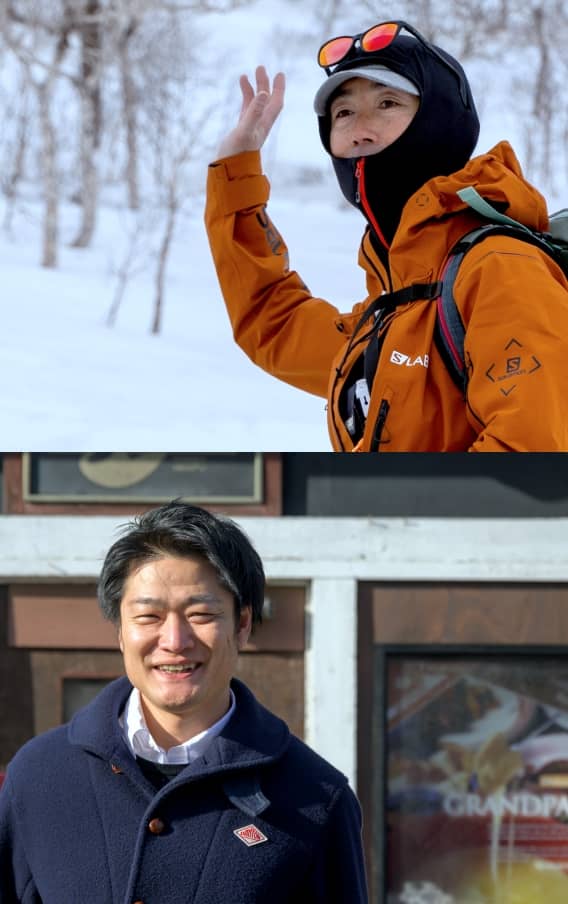
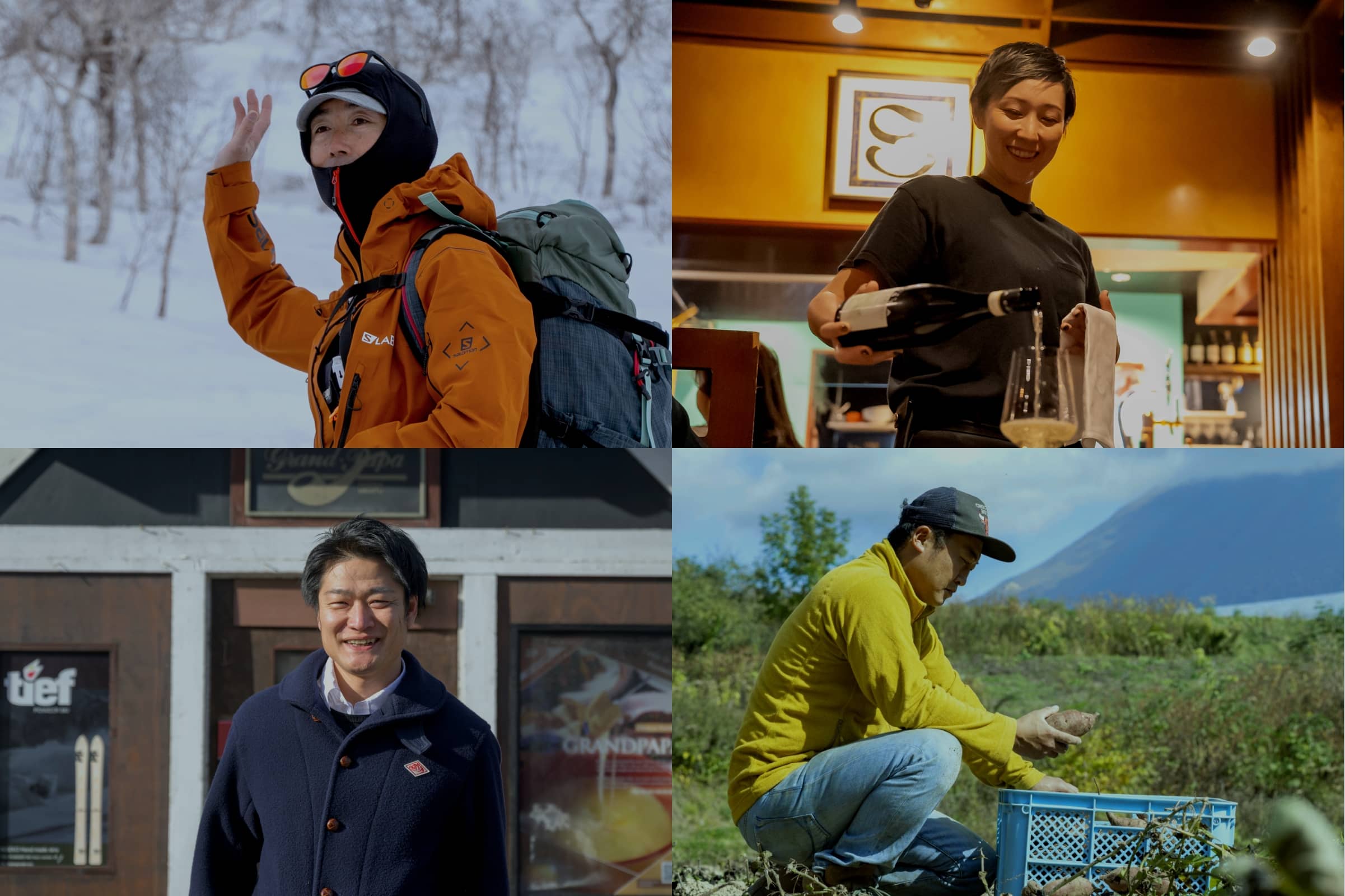
Ryuta Furuichi

President of Mountain Guide Coyote /
President of Niseko Yotei Alpine Club

Discover life in nature

Scroll

Interviewee Profile

Ryuta Furuichi

President of Mountain Guide Coyote / President of Niseko Yotei Alpine Club

Born in Chiba Prefecture. After graduating from university, he began working for a company in Asahikawa, Hokkaido. He was transferred to Kutchan and moved there, where he later decided to become a guide. He founded Mountain Guide Coyote and has been guiding mountain climbers in the summer and backcountry skiers in the winter. He has been the president of the Niseko Yotei Alpine Club since 2015.

Finding a job in Hokkaido
while seeking nature.
Becoming a guide
in Kutchan

― You are originally from Chiba Prefecture, aren’t you?

Yachiyo City, Chiba Prefecture. Through the influence of my grandfather, I had many opportunities to be in contact with nature since childhood, and in seeking a place with a lot of nature, I found a job at an agriculture-related company in Asahikawa City. I was then transferred to Kutchan and liked it so much that I left and worked for several years as a guide for an outdoor guide company, and in 2006, I started the business that would become Mountain Guide Coyote.

― What makes Niseko special to you?

I was first fascinated by the mountainous landscape, including Mt. Yotei. If you stay on as a company employee, you may be transferred to another location and cannot live where you want to live. So, I decided to leave my job and become a guide in a place close to nature. My parents live in the main island of Japan, so I looked around at other places as well, but I again felt that Niseko was the best place to start my career.

― How do you spend your days off?

I have always had an affinity for the philosophy of the Jomon period since I was a child, and I enjoy visiting Jomon sites in the Northern Tohoku and Hokkaido regions that have been registered as World Heritage sites, participating in Jomon field burning events, and exploring together with my wife, who also loves the Jomon period. My ideal lifestyle combines Jomon philosophy with modern technology, and I am attempting to reduce the burden on the natural environment by growing vegetables in the fields, generating electricity from solar power, and being as self-sufficient as possible.

Aiming to Achieve Sustainable Tourism

― What made you want to become a mountain guide?

I wanted to create a place where everyone could take part in the field of nature. I began to think that a guide would be a good way to accomplish this. I think that if people learn about and come to love nature through mountain climbing and skiing, it will lead to a desire to try to preserve it.

― What are the advantages of having a guide?

When you go around on your own, the only benchmark you have is the course time, and your perspective tends to be narrower than you might think. By having a guide, you can discover things you would not have noticed on your own and enjoy mountain climbing more deeply from a three-dimensional perspective. Each of the guides in Niseko have their own area of expertise, so you will have a completely different hiking experience depending on which guide you choose to walk with.

― In your job, you are deeply involved with nature, but is there anything in particular that you try to keep in mind?

That both mountain climbing and skiing can not be done without nature, and that nature is the source of all things. I am working toward achieving sustainable tourism and not depleting our natural assets. Without beautiful mountains and trails, they might as well not even exist for those who climb them. We carry fuel and tools on our backs and stay in the mountains for several days to maintain the trails. We are also engaged in other activities to remove Dicentra peregrina, which is considered a non-native species that could impact the ecosystem.

As a professional who knows
the mountains inside out,
what courses do you recommend?

― What are some of the attractions of Niseko?

My parents’ house is in the main island of Japan, so I like that it is easy to approach. Also, it only takes 2.5 hours to get to Chitose Airport.
It is also a miracle that such stunning nature exists so close to where we live. Since the mountains, rivers, and lakes are all within a short distance and can be reached at a moment’s notice, many people enjoy one ski run before going to work. Mt. Yotei and the high-rise marshlands of Mt. Annupuri are particularly valuable natural environments in Japan. There are two types of nature, fragile nature that cannot be restored once vegetation is lost, and nature that can be restored, and mountain tops and wetlands are the former. And the more fragile nature is, the more beautiful the landscape.

― If you were to guide a friend visiting Niseko, where would you take them?

If the person is fit, I would recommend staying overnight in a hut on Mt. Yotei. The higher you climb, the greater the view, and the view extends all the way to the sea. On the first day, we would go to the shelter at the 9th station and enjoy a dinner such as hot soup and rice while watching the sun set over the Sea of Japan. If you are lucky after dark, you can even see the fishing lights of squid fishing boats floating along the sea at night. If staying in a hut is a bit too demanding, you can enjoy a light hike up Chisenupuri through Shinsennuma and Naganuma, which offers a variety of courses including rock climbing.

Contact

Mountain guide Coyote
21-5 Kita 4-jo Higashi 8-chome, Kutchan-cho, Abuta-gun, Hokkaido 044-0004
https://www.mg-coyote.com/

※This article is based on information available as of November 2024.

People

02

Make Niseko
Your Home,
Where The Heart Is

Kohei Nikahara

Owner of Niseko Grandpapa Lodge /
Chairman of Kutchan Tourism Association

Discover life in nature

Scroll

Interviewee Profile

Kohei Nikahara

Owner of Niseko Grandpapa Lodge / Chairman of Kutchan Tourism Association

Born in Sapporo, Hokkaido. He grew up in Niseko from the age of 4. He was an alpine skier since his school days and studied abroad in Germany. After attending university in Sapporo and working for a travel agency, he returned to Niseko and took over Niseko Grandpapa Lodge from his father. He has served as Chairman of the Kutchan Tourist Association since May 2024. He is also the founder of Tief Powder Ski, a craft skiing company that uses broadleaf trees from the southern part of Hokkaido.

Alongside a Changing Niseko

― What was Niseko like when you were a child?

This area used to be a pension town. Today, there are more condominiums and villas, and the number of pensions has decreased to about one-tenth of what it was back then. Niseko Grandpapa Lodge remains exactly as it was when it was first opened. This is the only place that has remained the same—the surrounding landscape has changed dramatically.

― Did you have plans to take over the pension someday after once finding a different job?

Initially I had no plans to return here. I was working for a travel agency in Sapporo, but when I had time off, I went back to Niseko to work as a ski instructor. Back in the day when I was a student, alpine skiing was done on snow that was almost icy, so this was also the time when I properly skied Niseko’s powder slopes. The quality of the snow was good, you could go backcountry, and the environment was conducive to skiing, which I found very appealing.
It was about the time when we started to see a few foreign visitors here and there, and they told us that “Niseko was going to become a great place to visit.” I thought there might be some potential here, so I decided to take over the pension business.

― You anticipated early on that it would become an international ski resort.

Yes. I wouldn’t go as far as to say that I was certain but… I studied abroad in Germany so I was able to speak foreign languages and I previously worked for a travel agency so it was easy to get information and I think I acted rather quickly.
We changed the way we manage our business in anticipation of the increasing number of customers from abroad, such as creating our own website from scratch. Since many people dine out in the evening, we also opened a restaurant where you can enjoy original cheese fondue, a combination of authentic Swiss cheese and Niseko potato starch.

Starting a Craft Ski Company
in Search of the Ideal Skis

― We heard that you have experience competing in national skiing competitions.

During my years as a student, I traveled to national and international alpine skiing competitions. Even after retiring, skiing has always been a part of my life, including modeling for ski magazines and posters. After returning to Niseko, since I have to manage the pension during the season, my routine is to pick up and drop off clients at the ski resort, and if the snow conditions are good, I will go out and do one ski run myself and then come back. After the busy winter season is over, one of the things to look forward to is the local ski races held in the spring.

― What is the story behind how you launched Tief Powder Ski?

Rocker skis are considered suitable for powder snow like that found in Niseko, but they lack stability when making turns. I thought it would be nice to have natural, non-rocker skis that would allow both carving and deep snow skiing. When the COVID-19 pandemic occurred and I had some time to spare, I started to think about making something on my own, and when I presented my idea to a factory, they said, “Yes, we can do it,” and we started working to make it a reality. Another appealing point is that no two skis are alike, as birch and cork trees from this region are used for the core wood, and the realistic grain of the wood is utilized.

― What kind of person would you like to purchase these skis?

Since they are skis with a unique concept, we are producing them in the hope that they will please a core group of people rather than trying to popularize them all at once. They are also available for rent at the Niseko Grandpapa Lodge but it’s not often you find an inn where the owner makes the skis. Many of our customers are ski enthusiasts, and I enjoy talking with those skiers myself.

Connecting Tourism with
Local Communities to Make
Niseko a Heart’s Home

― What are your duties as chairman of a tourism association?

Immediately after assuming this position, I was particularly busy making rounds to greet all the relevant parties. Every day, I bring ideas for tourism policies to the meeting and discuss them with the members, putting my mind and body to work for the future of Niseko. Many of our guests stay with us for long periods of time, so recently I have been thinking about creating a place where they can gather and participate in the local community. We are exploring the possibilities of Niseko’s unique value to become not just a tourist destination, but a second home.

― You seem to be busy running a pension, crafting skis, and serving on a tourism association, but what do you enjoy doing on a day-to-day basis?

One of my small pleasures is preparing finger foods and drinking wine. In the winter, I am too busy working at the pension to make elaborate dishes, so the cheese fondue, which is served as the main course at the restaurant, is my go-to dish. In the summer, I like to make acqua pazza using the fish I caught and serve it with white wine. I often get together with friends that work in the same industry.

― Where would you take your friends if they come to Niseko?

Fishing and kayaking are also fun activities to do in the summer. If you kayak to Cape Benkei, you can often catch rockfish such as flounder and jacopever. I also recommend the Shiribetsu River during the snowy season when melted snow flows into the river. Rainbow trout that have been toughened by the cold water have a strong pull and are popular among local anglers.
Seasonal vegetables are also available at different times of the year, so when you come to Niseko, you should definitely try them before returning your home.

Contact

Niseko Grandpapa Lodge
1-16-54 Niseko Hirafu 2-jo, Kutchan-cho, Abuta-gun, Hokkaido 044-0089
https://grandpapa.co.jp/

※This article is based on information available as of November 2024.

People

03

Delicious Food
that
Brings People Together

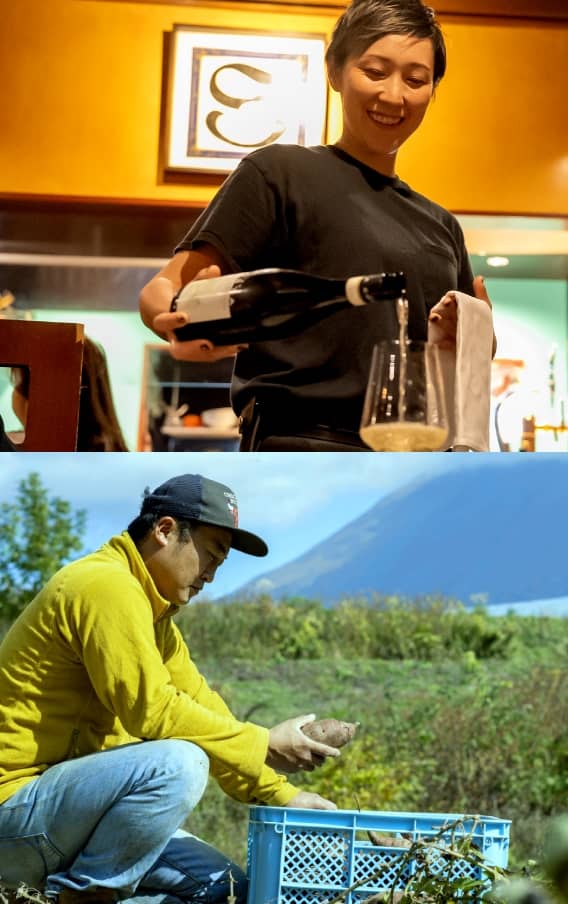
Chiaki Watanabe

Director of Swell Co., Ltd.

Discover life in nature

Scroll

Interviewee Profile

Chiaki Watanabe

Director of Swell Co., Ltd.

Born in Tokyo. She traveled to various places while studying foreign languages in Australia and Germany before moving to Niseko in 2018. She currently serves as a director of Swell Co., Ltd., which has been operating Cucina Italiana Santo since 2022. At Santo, she is in charge of management and customer service.

I moved to Niseko,
Driven by the People and the Nature

― What prompted you to move to Niseko?

I originally lived in Tokyo, but in my 20s I began going abroad on working holidays, and I felt that a place closer to nature suited me better than being in a city. However, there is no one particular reason why I came to live in Niseko.
The first time I stayed here was about 10 years ago, and I worked a part-time job for one season. After that, my friend who remained in Niseko told me that summers here are also nice, so I came without thinking much of it, and then was told that winters here are nice too, so I came again in winter… and eventually I found myself staying there.

― When did you start working at Santo?

I joined Santo as a part-time employee after an acquaintance who worked at Swell, Santo’s predecessor, recommended it to me as a good fit for me. At the time they were looking to change the atmosphere of the restaurant. Swell was located in the town of Kutchan, but the building was to be demolished due to its age, and the company was incorporated at the time of its relocation to its current location in 2022. It was also around this time that Chef Watanabe and I became partners both professionally and personally. At Santo, I am in charge of handling everything but the food, including customer service and managing reservations.

― This is a lovely place surrounded by nature.

Yes, you can feel the seasons just by being here, and I think we have really found a very special place. One day you come to work and there might be dandelions blooming all over the place whereas yesterday there were none, and leaves that were lush in summer turn red and fall to tell us that winter is coming. Just looking at the changing scenery is soothing. But I also learned not to push myself too hard because the nature in winter is sometimes very harsh. If the weather is bad, we will give up on our plans, and if it is something related to the restaurant, we will tell them we are sorry and ask them to change it.

All Customers are Family,
Regardless of Nationality or Occupation

― What kind of service do you strive to provide?

We consider all of our guests to be part of the Santo family, regardless of their nationality or occupation. I think about how I can make them feel happy at the end of their visit. I provide customer service with the intention of ensuring they leave in a pleasant mood. Thankfully, we have many regular customers.

― What are some of the attractions of Santo?

First of all, the meals they prepare for employees are extremely tasty. Also, being able to interact with people whom you would not be able to meet in your everyday life. They come from many different countries and have different lives. Niseko is probably the only place in Japan where such a diverse group of people come together. I am happiest when customers from various backgrounds tell me how much they enjoyed the restaurant and that they will come back again because it was so good.

― The interior atmosphere is also very nice.

Thank you. I like Italian-style colorful interior design, so I aim to create a space that is flashy yet cozy. One of my chef friends is a painter and carpenter, so I shared my image of the subtle hues and other details with them and asked them to bring that image to life. The wine cellar was also made by a friend, and Santo is what it is today because of the people I met here.

Connecting with Industry Peers to
Enhance Niseko’s Culinary Scene

― Do you have any interaction with people who are originally from Niseko?

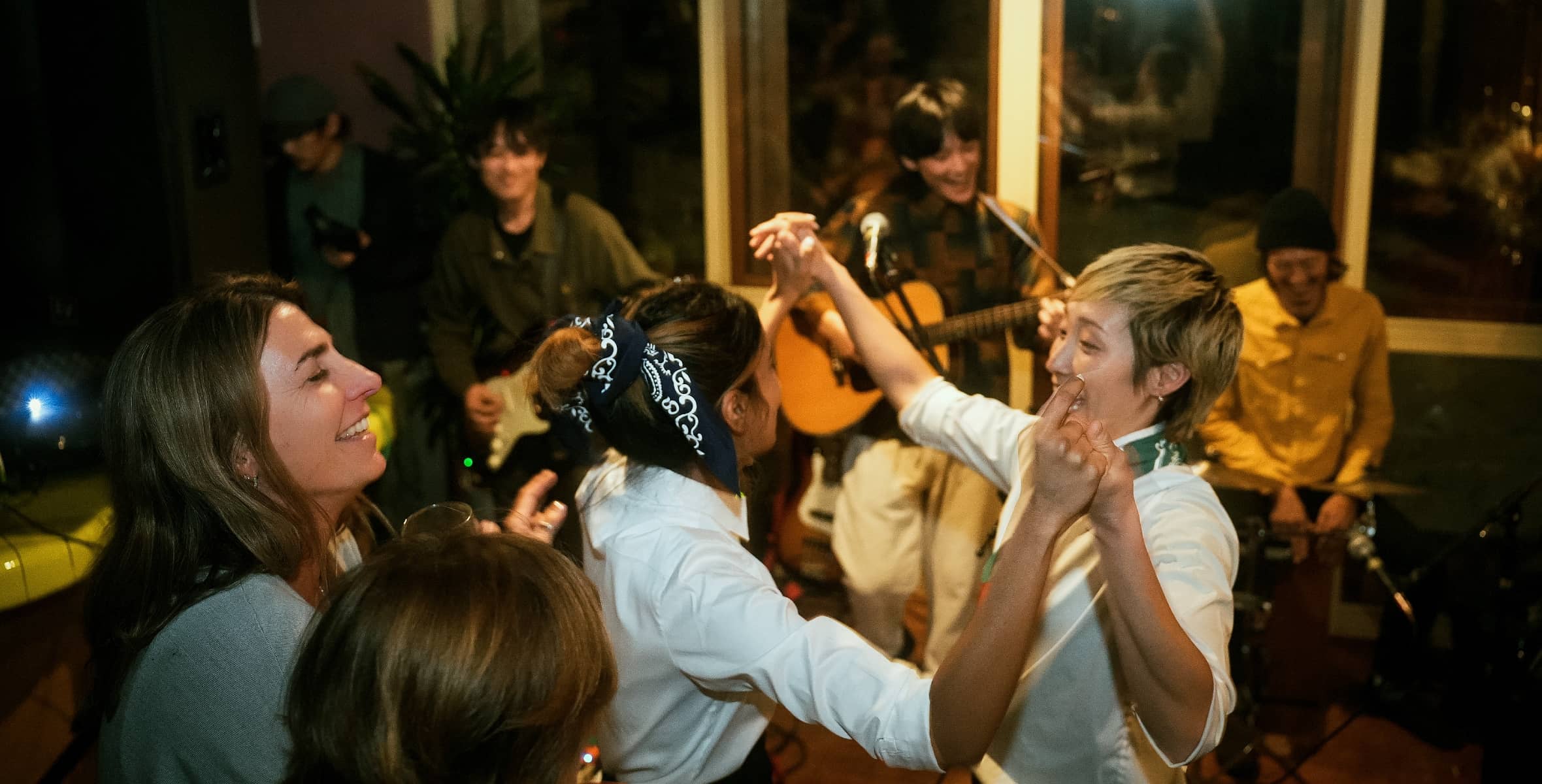
I had been talking with some friends in the restaurant business in the area about the possibility of organizing a food festival as an event in Niseko, and we recently had a barbecue as a way of socializing as well. There are people who have been operating restaurants in Niseko for a long time, and there are also people like us who moved to Niseko and opened their own businesses, but there are no barriers between us, and there is an atmosphere of working together to make the area more prosperous.

― Do you often spend time with friends and colleagues on your days off?

Participating in wine tastings, which are also held near Otaru and Niseko, is one of the things I look forward to doing, and I often find myself at some sort of social event or another. There are many people here who love music, and the circle of friends naturally expands at music-related parties and other events. Niseko also has an abundance of hot springs, each with different qualities, so visiting them is also an enjoyable experience. It is not uncommon to bump into a friend at one of my favorite hot springs.

― Where would you take your friends if they come to Niseko?

I myself love animals, so I would spend the morning visiting the Ostrich Farm and Kijima Farm, where you can spend time with the animals, and say hello to Koo-chan, a pony kept at Huckleberry Farm, which is located on the same site as Santo. After enjoying lunch at Xie Xie, a Chinese restaurant that is very popular among the locals, I would take them to Takedaya Rafting, which is run by friends of mine, for a river rafting adventure. The people that run the company are truly wonderful, and it undoubtedly would make for a fun and memorable experience.

Contact

Cucina italiana Santo
259 Kabayama, Kutchan-cho, Abuta-gun, Hokkaido 044-0078
https://cucinaitalianaswell.com/

※This article is based on information available as of November 2024.

People

04

A Niseko Specialty
that Spreads its Wings
from the Fields

Daisuke Nakamura1

President of Niseko Tasty

Discover life in nature

Scroll

Interviewee Profile

Daisuke Nakamura

President of Niseko Tasty

Born in Ishikari, Hokkaido. After graduating from college, he worked as an engineer for a semiconductor manufacturer in Kanagawa Prefecture. After leaving the company, he spent three years wandering abroad and in Japan before moving to Niseko. He was assigned to the Agricultural Administration Division as a member of the Local Revitalization Cooperation Group. He started his new farming business in 2021 and serves as the president of Niseko Tasty.

Farming in Niseko
Through Relationships
with the Local community and People

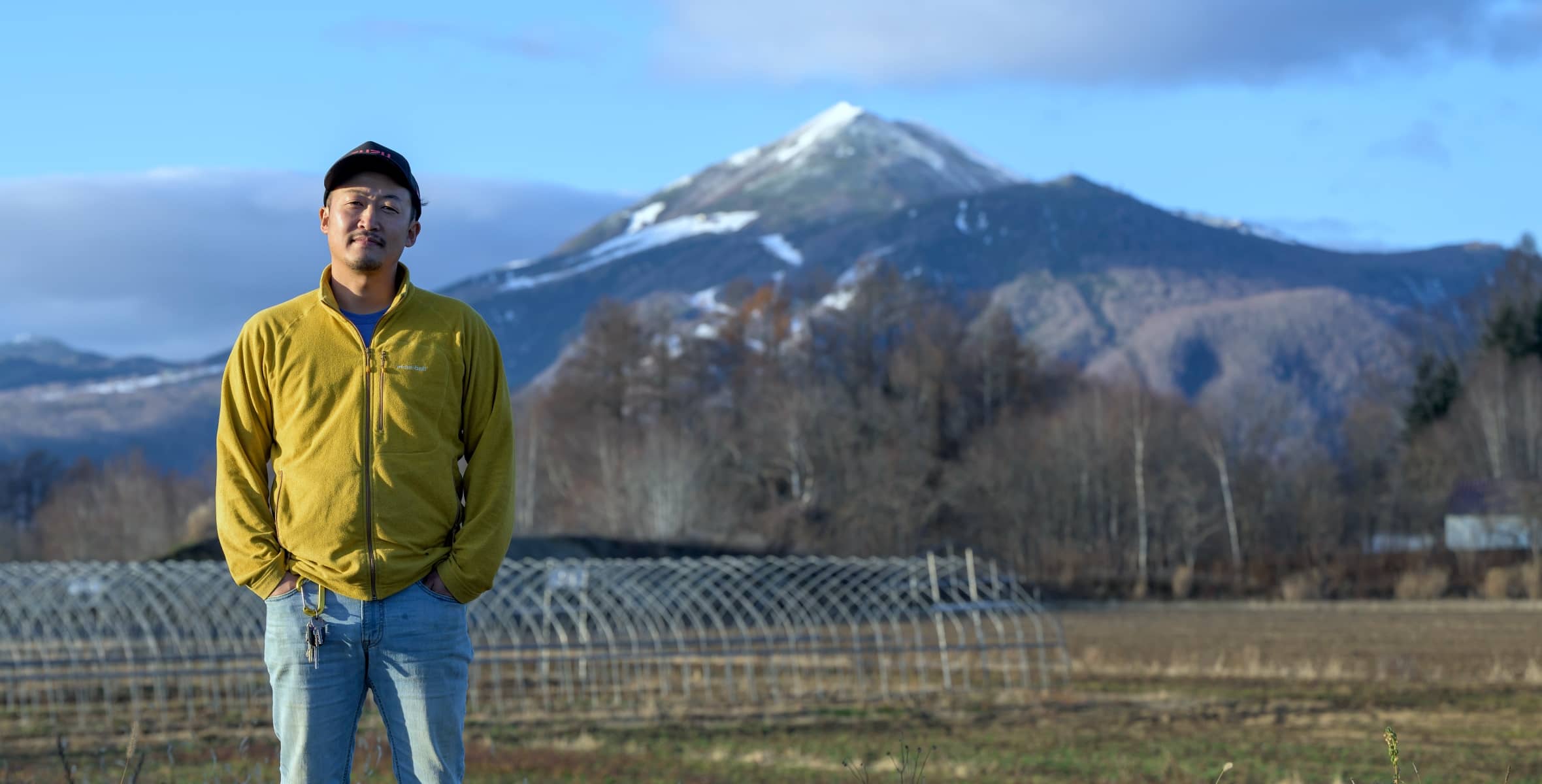
― Why did you decide to become a farmer?

When I used to work as a semiconductor engineer, my work would take me overseas for about six months out of the year. I felt like I wasn’t grounded, and that I couldn’t continue this lifestyle for the next few decades. After quitting my job and working on a banana plantation in Australia on a working holiday, I realized that it was the one and only job where I could create something from scratch that would become a source of sustenance for life. That’s around when I first became interested in farming. When I moved to Niseko a few years later, I decided to try my hand at farming.

― What prompted you to move to Niseko?

After returning from overseas, I hitchhiked from Ishikari to Kyushu, stopping in Niseko rather early on in the trip. I was overwhelmed by the magnificent landscape, with Mt. Yotei looming large in the distance. After that, I visited many places in Japan that people said were beautiful, but in the end, I couldn’t get Niseko out of my mind and decided to move there. During my first year here, I worked part-time as a live-in farmer in the neighboring village of Makari, and then was assigned to the agriculture division as a member of the Niseko Town Local Revitalization Cooperation Group, where I was able to learn while assisting the farmers.

― There is an impression that starting a farm is a difficult hurdle to overcome, but did things go smoothly?

I had always wanted to start farming after graduating from the cooperation group, but you can’t start a farm without a field. Then, through a chance encounter, I got acquainted with Mr. Endo, the owner of the land, and when I told him I wanted to farm, he offered to give me the land, which had been idle for some time. I am extremely grateful to him for passing on his precious land to me, someone who is neither a relative nor a native of Niseko, and whom he has only just met. He recognized my experience and achievements as a member of the Niseko Town Local Revitalization Cooperation Group, and I was able to successfully start farming.

A Souvenir that will Someday
Symbolize Niseko

― What kind of crops do you grow at Niseko Tasty?

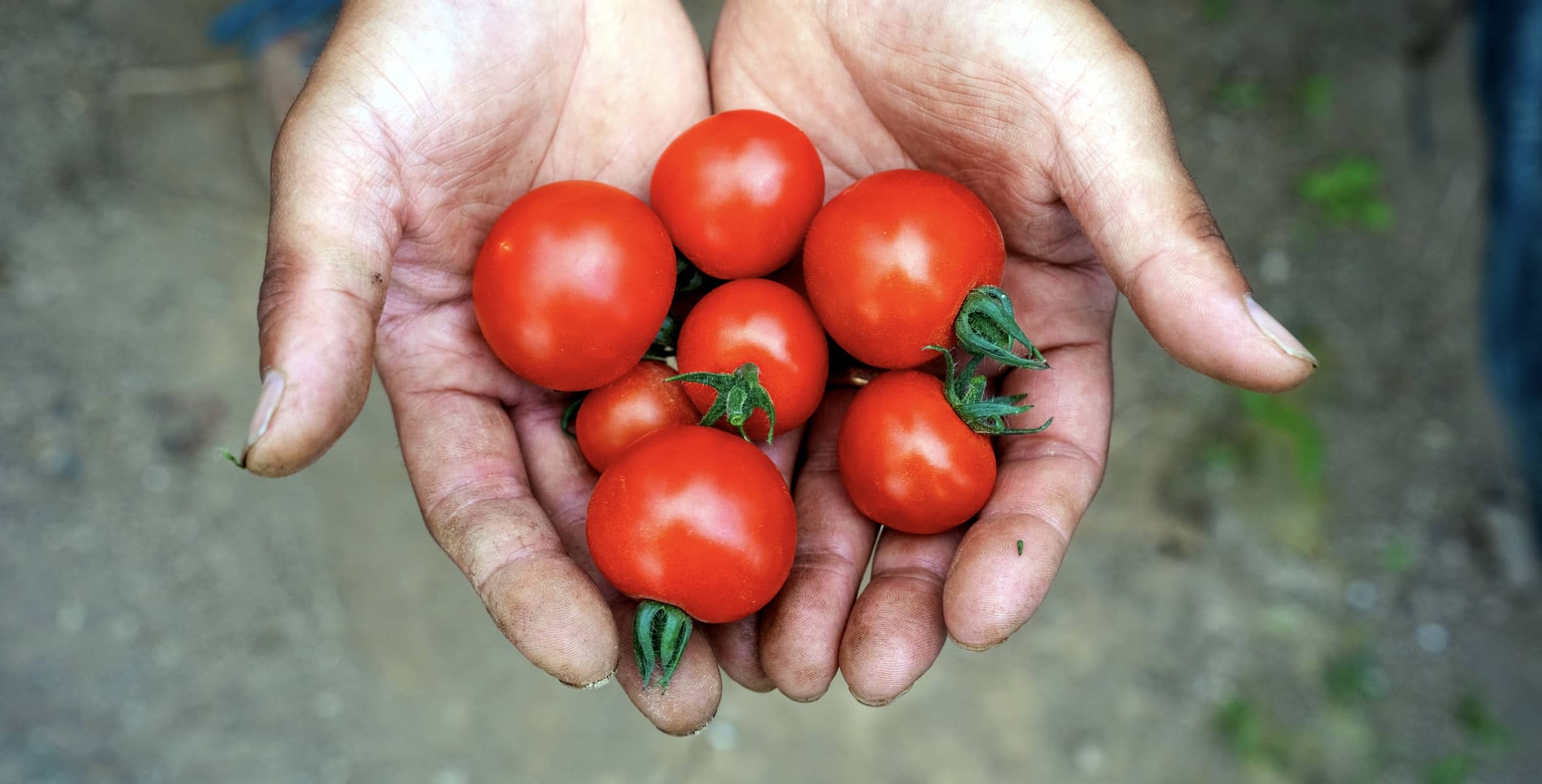
Mainly mini tomatoes, watermelons, and sweet potatoes. While Hokkaido is famous for its potatoes, sweet potatoes are among the new crops recommended by Hokkaido in response to the recent climate change. Unlike potatoes, sweet potato cultivation is labor-intensive because it cannot be mechanized, and it also takes time after harvest to increase its sugar content, as it must be allowed to rest after harvest.

― So sweet potatoes you put so much time and effort into turn into the dried sweet potatoes.

Vegetables must be cooked to be eaten, so I started processing them into dried potatoes because I wanted to make something that could be eaten immediately after it is bought. I was also lucky that Mr. Endo had left me the drying machine he had used to make dried sliced daikon radish. During the winter off-season, we are dedicated to making dried sweet potatoes. I have a secret ambition to turn this into a Niseko specialty souvenir so that everyone will recognize Niseko Tasty’s dried sweet potatoes when they hear the name Niseko.

― Your work seems to be affected by nature and the climate, but what are some of the difficulties you face?

Because the moisture content of sweet potatoes increases if there is heavy rainfall before harvest and the flavor is diluted, the climate at harvest time is a concern. But that’s about the only thing that comes to mind, and to be honest, it’s actually not that challenging. Even when typhoons, a major enemy of agriculture, come, we often do not suffer that much damage from the wind and rain because we are in the mountains, and we feel the benefits of our environment.

The Joy of Having a Daily View of
a Mountain Range Second to
None in the World

― How is life in Niseko?

While the views of famous mountain ranges I have seen overseas in places like Nepal and Patagonia were amazing, Mt. Yotei and the surrounding mountains in Niseko are simply unbeatable. I am happy just to be able to see this scenery every day. I try to leave home before sunrise, and the fields are the best view spot to see the sunrise and Mt. Yotei. If you look at it every day, the position of the rising sun shifts little by little. Once a year, the sun rises from the top of the mountain.

― Where would you take your friends if they come to Niseko?

I have many friends that live the city, so if it is their first time in Niseko, I often take them to places that are unique to Hokkaido. First, I take them to Takahashi Ranch, where they can take pictures on a hay roll with a mountain range in the background and eat soft-serve ice cream. I’m curious about the new zipline, which I haven’t been able to try out yet either. Since Niseko is close to the sea, the seafood is fresh and delicious, so in this area, I would recommend “Sushi Hanakichi,” and if they don’t mind going a little further away, I would also recommend a sushi restaurant in Kamoenai, where celebrities are known to come to enjoy the food.

Contact

Niseko Tasty
95-4 Motomachi, Niseko-cho, Abuta-gun, Hokkaido 048-1544
https://www.instagram.com/niseko_tasty/

※This article is based on information available as of November 2024.

People

05

So that everyone can
enjoy outdoor sports

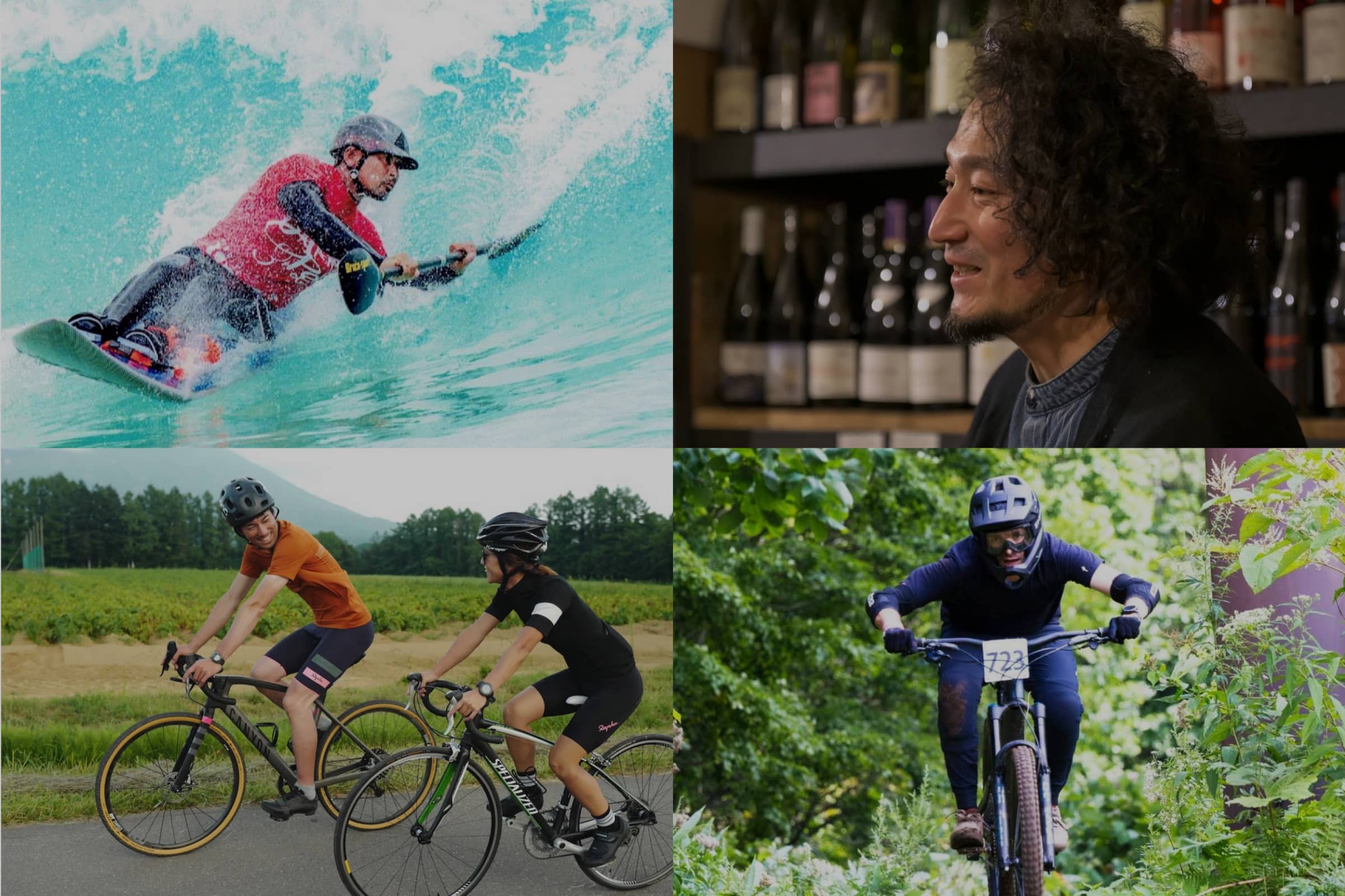
Tatsumi Hiromi

Paralympic Athlete / Chair Snowboarder /
Representative of Youtei Outdoor

Discover life in nature

Scroll

Interviewee Profile

Tatsumi Hiromi

Paralympic Athlete / Chair Snowboarder / Representative of Youtei Outdoor

Born in Tokushima Prefecture. Moved to Niseko in 2003, where he began guiding while enjoying outdoor sports. In 2008, a snowboarding accident caused spinal cord injury, leaving him paraplegic. He took up kayaking and chair skiing/snowboarding. In 2011, he and his wife started YouteiOutdoor. Father of two children.

I do it because I want to,
over and over again.

― Why did you decide to keep challenging yourself with outdoor sports even after your injury?

When I first heard I was paralyzed from the waist down, I was depressed. But what I really hated was the idea that I wouldn’t be able to do the things I’d always done. I realized that with a wheelchair, I could still get around and live my life. So I thought, maybe I could still do the things I used to do.
In Niseko, cars are essential for both daily life and outdoor sports. Knowing I could drive a car equipped with a hand control system was also encouraging.

― Did you start again right away?

I was discharged in the summer, so I first tried kayaking. Since you paddle in a seated position, I thought I might be able to do it even without lower body movement. I had some experience before, so I gradually got the hang of it and could ride.
That winter, I also started chair skiing, but it felt different from the snowboarding I’d enjoyed before. Since chair skiing was the only option for someone with paraplegia to glide on snow, I thought, if it doesn’t exist in the world, I’ll just have to make it. I consulted with Taro Tamai of GENTENSTICK, and together we’ve been developing a chair snowboard.

― What led you to pursue competitive canoeing?

In 2011, I heard that para-canoe might become an official event at Rio. I was invited to compete in a tournament in Kagawa that also served as an overseas selection trial. Since it was close to my hometown of Tokushima, I thought, “Why not give it a shot while I’m visiting home?” I entered with a casual mindset.
I ended up placing second there. Then, the first-place finisher withdrew, suddenly putting me in a position to go overseas as a Japanese representative. My wife encouraged me, saying, “You won’t know unless you try, so just go.” So I decided to give it a shot. The Kagawa tournament was at the end of March, and by the time Golden Week ended in May, I was in Poland.
I figured an opportunity like this might not come again in my lifetime, so that’s how I started as a para-canoe athlete. Unfortunately, I missed out on qualifying for Paris, but I’m still the fastest in Japan. I plan to keep going as long as I can keep winning.

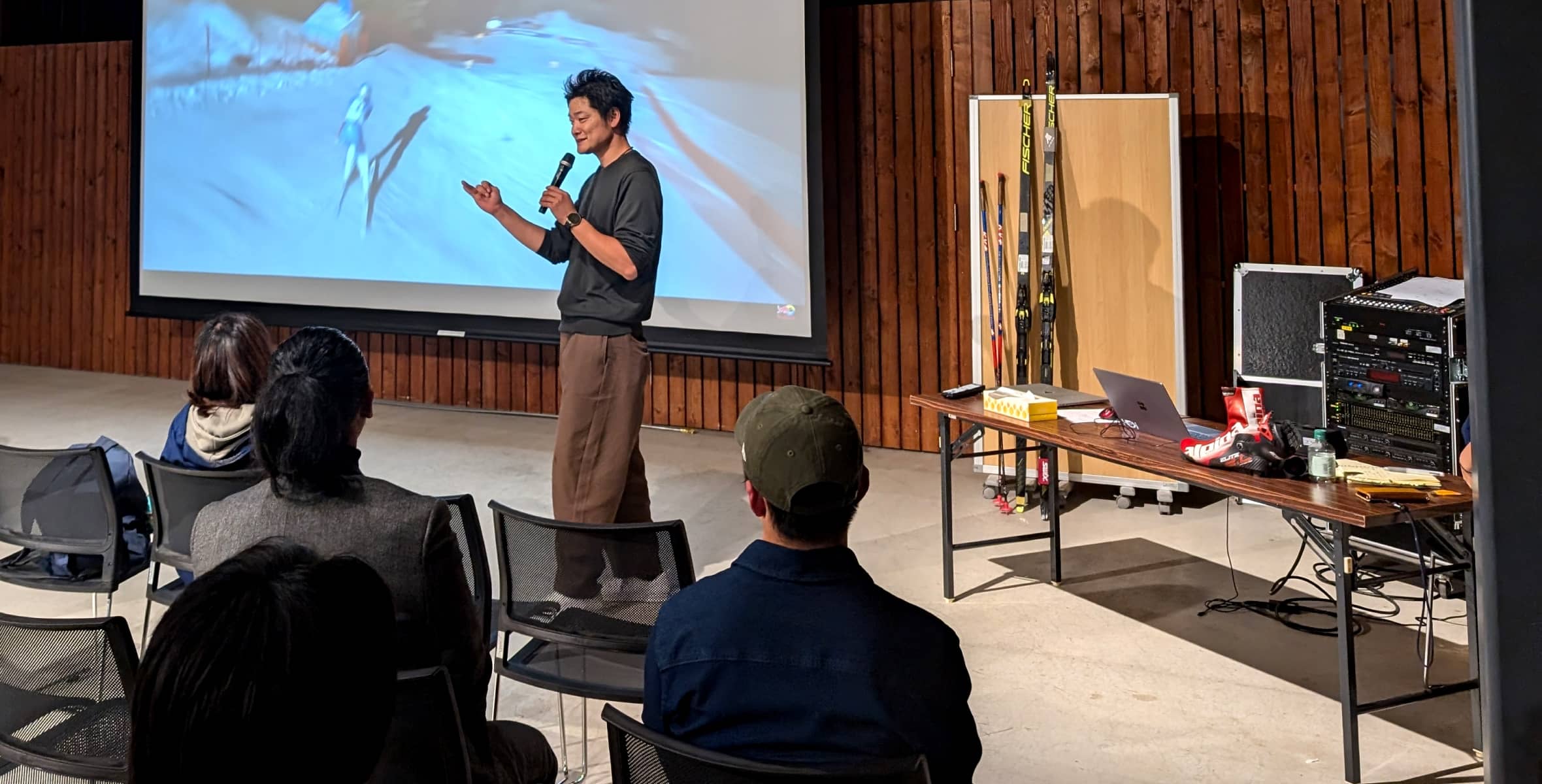
From 0 to 94 years old, including
those with disabilities,
an outdoor experience everyone can join.

― So you’ve also restarted your guiding business with YouteiOutdoor.

After becoming wheelchair-bound, I ended up building a house. There was a pond on the property fed by spring water. The view of Mount Yotei towering right before me was breathtakingly beautiful. I thought, even with my disability, I might be able to work here, and that’s how I started YouteiOutdoor. Since it’s a leisurely paddle around the pond, anyone from infants to seniors can participate.
I used to love whitewater rafting down wild rivers, and honestly, when I started this, I was a bit worried if such a leisurely rafting experience would be okay.

― Rafting that even 0-year-olds can enjoy is rare, isn’t it?

Yes, it’s fun for four generations. Our oldest participant so far was a 94-year-old grandmother. She rode in a boat with about eight family members, including her great-grandchildren. Even though she said, “I can’t do it,” we got her to paddle too. Kids around 3 or 4 might say “I can’t!” at first, but once you hand them a paddle, they get into it and start paddling away. Seeing the parents beside them smiling warmly is really heartwarming.
The rafting tours I used to guide involved rivers with currents, so age restrictions were standard. I often saw families split up—like dad and the older brother doing the rafting while the younger sister and mom went to the cafe. But here, the whole family can experience it together. Seeing how much our guests enjoy themselves, I realized this is something only I can do, and it’s something unique to this place.

― Can people with disabilities participate too?

Yes. We accommodate them. I can’t promise it’s absolutely possible for everyone, so I tell them, “Come and see. Once you’re here, we’ll figure out how to make it work.” When someone with severe disabilities participated, we set up a camping chair in the boat and supported their paddling so they could enjoy it.
I participate in activities at various places in Japan too, but when I call, I’m often turned down at first. However, if I clearly explain, “This part is possible, but this part needs support,” I often hear, “Well, maybe it could work then.” I hope to convey through experience that there are things people can do, even with disabilities.

In an environment blessed
with people and nature
Enjoying what you love

― It’s been over 20 years since you moved here. How’s life in Niseko?

Connections with people who share your passions are deep and strong. Since we’re mostly in the same field, you’re bound to run into someone to enjoy things with whenever you go out, and I get help from so many friends.
When I was talking with a customer about paragliding, they connected me with an acquaintance who provided the training equipment I needed. Niseko Tokyu Grand Hirafu provided lift tickets, and GENTEMSTICK sponsored me. It’s because of these connections in Niseko that I’m able to do what I want to do.

― What makes summer in Niseko special?

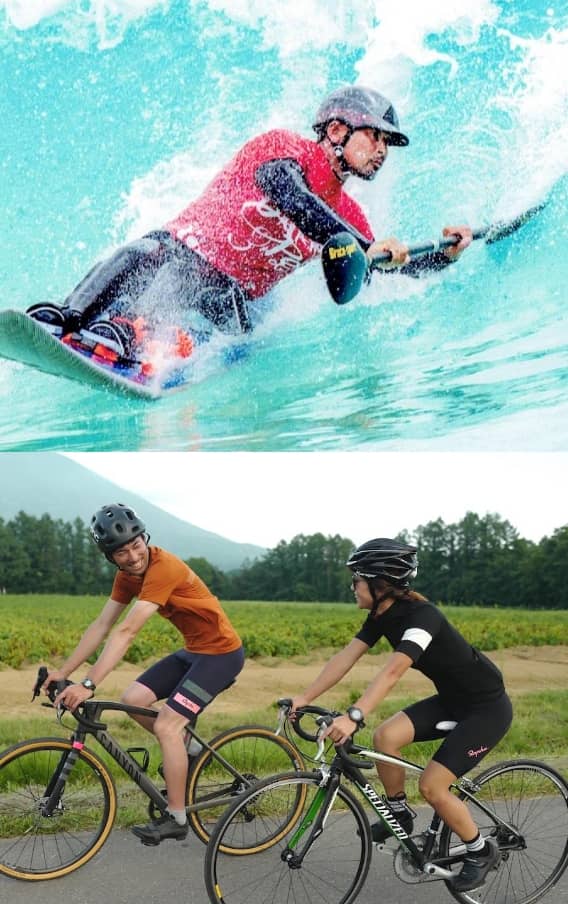
The latitude means we get more daylight than Honshu. Around the summer solstice, it starts getting light around 4 a.m. and doesn’t get dark until after 7 p.m. I can surf for two hours before work and stay in the water until about 7:30 p.m. after work. The days are long, so I’m pretty busy (laughs).

― Where would you take friends visiting Niseko?

Camping is especially great for families with kids. The long days mean plenty of playtime, and for little ones, experiences like building a fire or cooking outdoors—things they don’t usually get to do—are really valuable. YouteiOutdoor offers hands-free camping packages, and Niseko has lots of campgrounds.
Fishing is great too. For me, the rivers are hard to access, so I often go to the ocean at Yoichi or Iwanai. You can drive there and fish from the pier, so it’s convenient. Catching something to bring home is best, but even if you don’t catch anything, you can enjoy delicious seafood nearby. For visitors, there are fishing tours you can join without bringing your own gear.

Contact

Youtei Outdoor
449-4 Fujimi, Kutchan-cho, Abuta-gun, Hokkaido
https://www.youteioutdoor.com/

※This article is based on information available as of April 2025.

People

06

Not material
consumption,
but the fulfillment of
experiences
brings happiness.

Takashi Sugimoto

Representative of takeBICYCLE

Asami Sugimoto

RHYTHM Staff

Discover life in nature

Scroll

Interviewee Profile

Takashi Sugimoto

Representative of takeBICYCLE

Born in Gunma Prefecture. After graduating from university, he began his career at a sports shop in Tokyo. He later moved to Niseko to work at the ski shop TOYRU. During the COVID-19 pandemic, he launched takeBICYCLE, offering bicycle tours and mobile bike repair services.

Interviewee Profile

Asami Sugimoto

RHYTHM Staff

Born in Fukui Prefecture. After graduating from university, she joined a housing company. She went to Canada on a working holiday. Upon returning to Japan, she was drawn to Niseko for its English-speaking environment and snowboarding opportunities. She now works at the foreign-affiliated company RHYTHM.

In search of the ideal life, to Niseko

― What prompted you to move to Niseko?

Takashi: After graduating from university in Tokyo, I got a job at a sports shop in the city. The Harajuku store I was assigned to was far from the actual field, and few people bought gear to actually use it. I sensed a mindset focused on consuming things, and the work lost its appeal… Seeking an environment closer to the field, I came to Niseko around age 30 to work at TOYRU, which was already a core presence back then.

Asami: After graduating university, I joined a house builder and worked there for several years before going to Canada on a working holiday. After returning to Japan, I came to Niseko because it offered an environment where I could use my English and snowboard. After working at a ski resort, I joined RHYTHM, which handles ski/snowboard and bicycle rentals and sales.

― So you two met here then.

Takashi: That’s right. We met around my second or third year in Niseko, when my wife started spending both winter and summer seasons here. The dormitory where she worked was right in front of TOYRU, so we saw each other often.

Asami: By the winter I met my husband, I had moved to RHYTHM and started working year-round, so I became involved with bikes through rentals and guiding. Both my husband and I are pretty much all about bikes for work and play in the summer.

― How did takeBICYCLE get started?

Takashi: I was working independently, but I officially made business cards about three years ago during the pandemic. I earned my bicycle mechanic certification while working at a sports shop in Tokyo, handling repairs and sales. So, I worked at TOYRU in winter and did bike-related jobs in summer that became the foundation for what I do now. I also worked as an external staff member guiding bike tours at Niseko Tokyu Grand Hirafu (hereafter Grand Hirafu) and was part of the team that built the early Float Trail.
Then, when the pandemic hit and customers became scarce, I had time to think slowly and decided to pursue what I truly loved. I left TOYRU and started takeBICYCLE.

Even without making plans
If you go to the field, you’ll meet them

― What kinds of cycling experiences can you enjoy in Niseko?

Asami: When I first came to Niseko, road biking and cycling were the main activities. But over the past few years, trails have been developed, and mountain biking has been gaining popularity, so there are more options now.

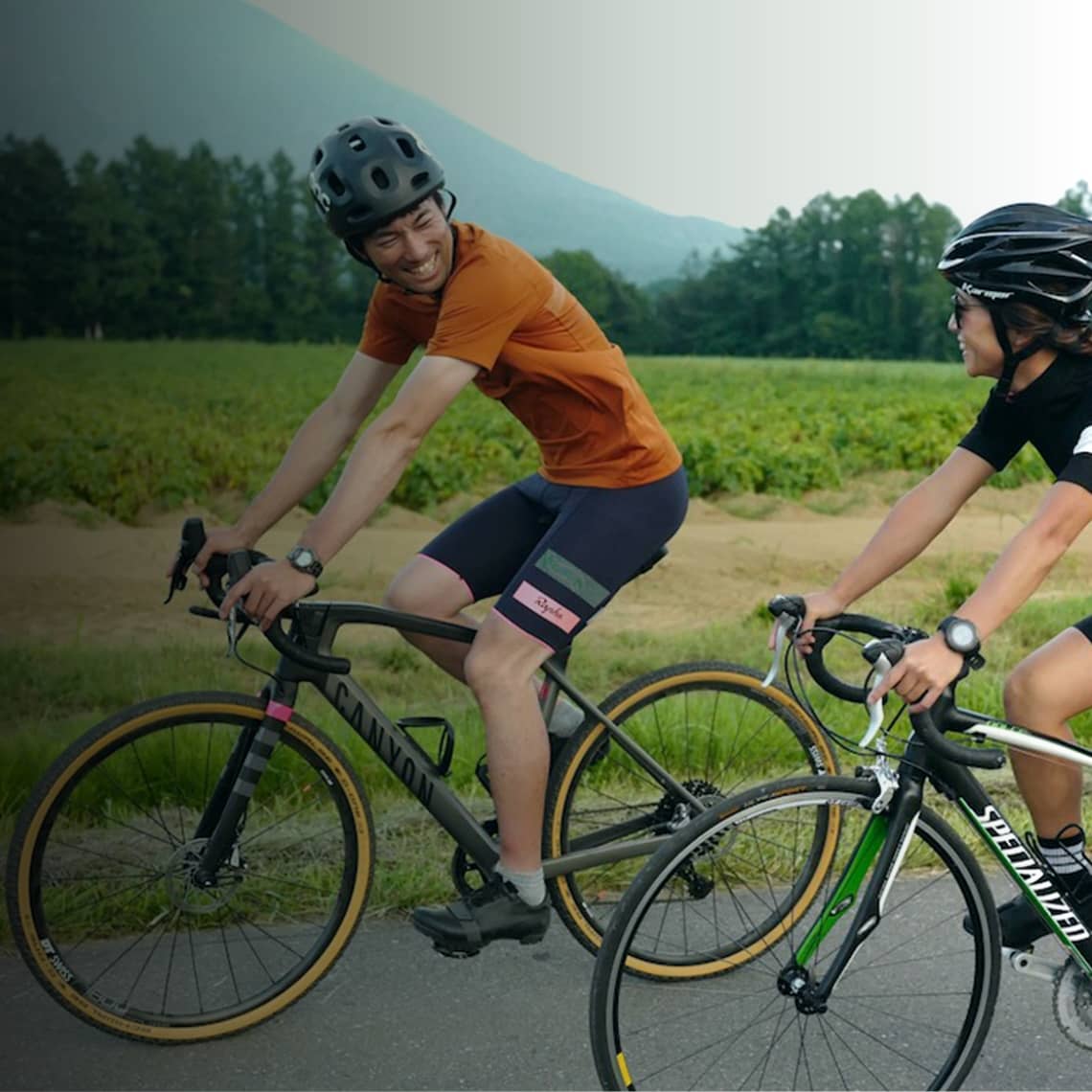
Takashi: At takeBICYCLE, we offer tours tailored to our guests' preferences and fitness levels. These include road cycling tours on eBikes or hybrid bikes, and gravel tours tackling unpaved gravel roads and mountain trails.
Gravel riding is a genre gaining attention lately, and nature-rich Niseko is an ideal field for it. Niseko Gravel, where I serve as course director, has seen growing participation and has become Japan's largest gravel event.

Asami: One appeal of cycling is how easily you can just hop on and go from home. I think many people enjoy it as part of their daily routine rather than a special activity.

― Do you two also live sports-filled lives?

Take: Yes. I also work at a North Face store near the ski resort. Our daily routine involves skiing a few runs together before work, then heading to our respective jobs still wearing our ski gear.

Asami: We've been going almost every day since the slopes opened, so we end up skiing about 150 days a year. In summer, we can ride mountain bike trails, so we ride our road bikes from home, switch to mountain bikes, do a lap or two, then head to work. We're basically at Grand Hirafu year-round (laughs).

Takashi: Our friends are pretty much the same, so bumping into each other is a daily occurrence. Even without plans, if you go to the trails or slopes, you'll run into someone, so we enjoy it together. There are quite a few friends who come almost daily, so if I don't see them, I start to worry.

― It's a wonderful environment where people naturally gather around what they love.

Asami: Since so many people share the same interests and sensibilities, we just naturally become friends. We also plan gatherings around the end of the busy winter season to celebrate and say “good job.”

Takashi: Even though I'm moving my body way more, I actually gained 5kg in my first year here in Niseko. The reason? Having friends nearby makes it so easy to just casually invite them out to eat. There are so many great restaurants too, so I ended up eating out more and gained weight. When I lived in Tokyo, the only people I'd go out to eat with were colleagues or friends from school. It wasn't until I came to Niseko that I made friends I could easily grab a meal with locally.

A lifestyle that values experiences
over material consumption

― Do you plan to keep living in Niseko?

Takashi: Yeah. I feel so at home here that I want to stay forever.
I just can’t handle crowded trains anymore…

Asami: I enjoy my hobbies from morning, work in a field related to them, and talk about them when I get home. My current life, where I spend all day doing only what I want, is comfortable and happy. I’m the type who wants to master sports rather than just enjoy them. I also love having an environment where I can practice snowboarding whenever I feel like it.

Takashi: At TOYRU, where I first worked, and now at The North Face, most customers come not just to buy things—like “I need outerwear because it’s cold” or “I want to ride like this, which board is best?”—but to enrich their experiences. Because we can interact directly with customers, our circle expands. We meet customers on the slopes and become friends, and the townspeople are all like that too. I’m living and working exactly as I imagined before moving here—this is the kind of life I hoped for.

― What makes Niseko appealing in summer, which is also cycling season?

Takashi: Even in midsummer, it’s relatively cool most days. Honshu gets too hot for outdoor activities, right? Since I work with bikes, I’ll mention cycling: Hokkaido has vast land and roads, and Niseko has few traffic lights on the roads with minimal car traffic. This makes it easy for beginners to enjoy comfortable cycling while taking in the scenery.

Asami: There are also many rental shops stocked with stylish, high-performance bikes. Just riding one gets you pumped up. Renting the latest eBIKE lets you zip around easily, expanding your range of exploration.

― Where would you take friends visiting Niseko?

Takashi: I’d take them on the cycling course around Mt. Yotei. It’s an isolated peak, so it’s cone-shaped, but its appearance changes completely depending on your angle. Sometimes it looks perfectly symmetrical, other times slightly distorted. Some slopes are deep brown, others rich green. It’s a luxurious course where you can enjoy gazing at Niseko’s symbol all day long.

Contact

takeBICYCLE
https://www.takebicycle.net/

※This article is based on information available as of April 2025.

People

07

Standing by the highway
A Mecca for natural wine

Masahiro Chiku

Cave de Bambou Owner

Discover life in nature

Scroll

Interviewee Profile

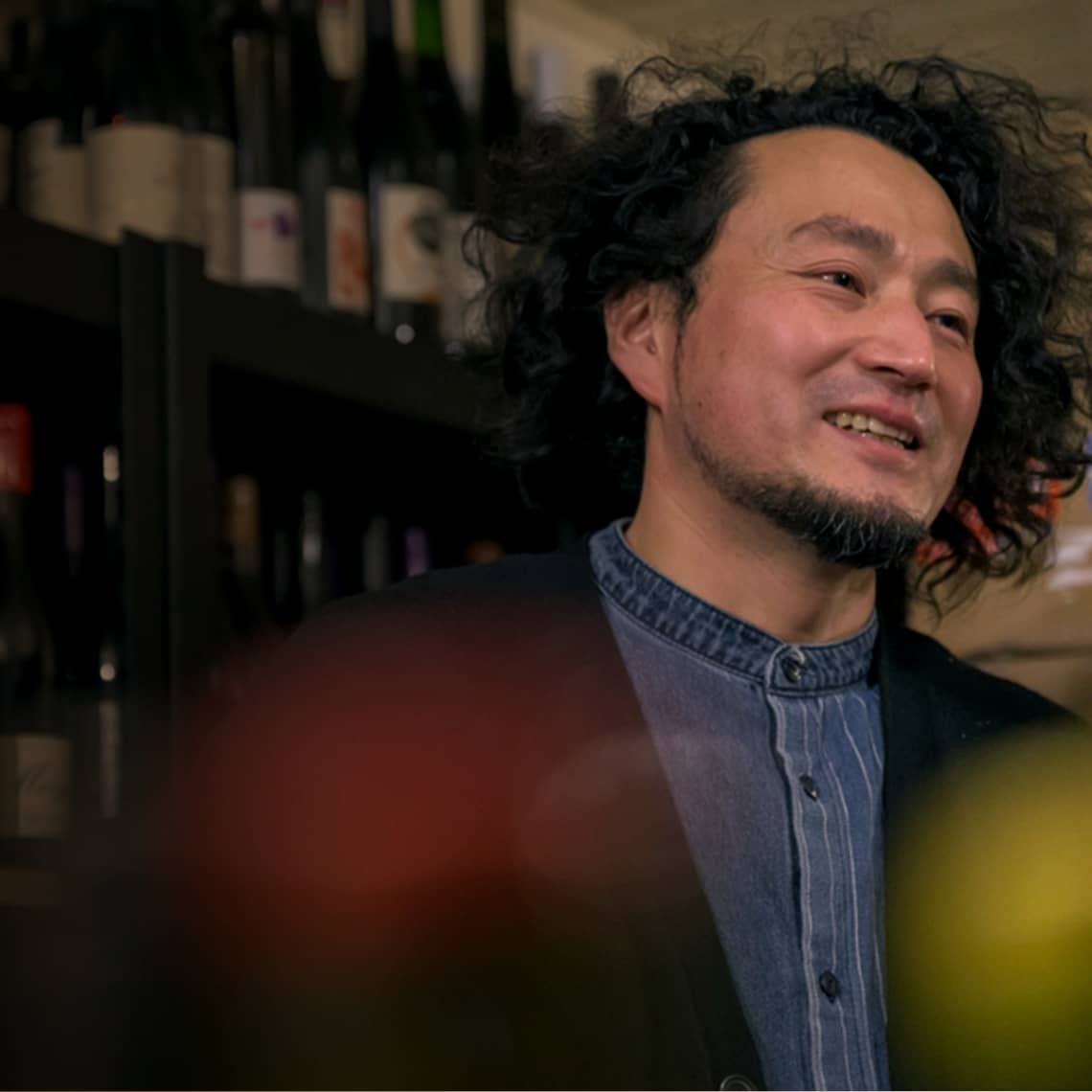
Masahiro Chiku

Cave de Bambou Owner

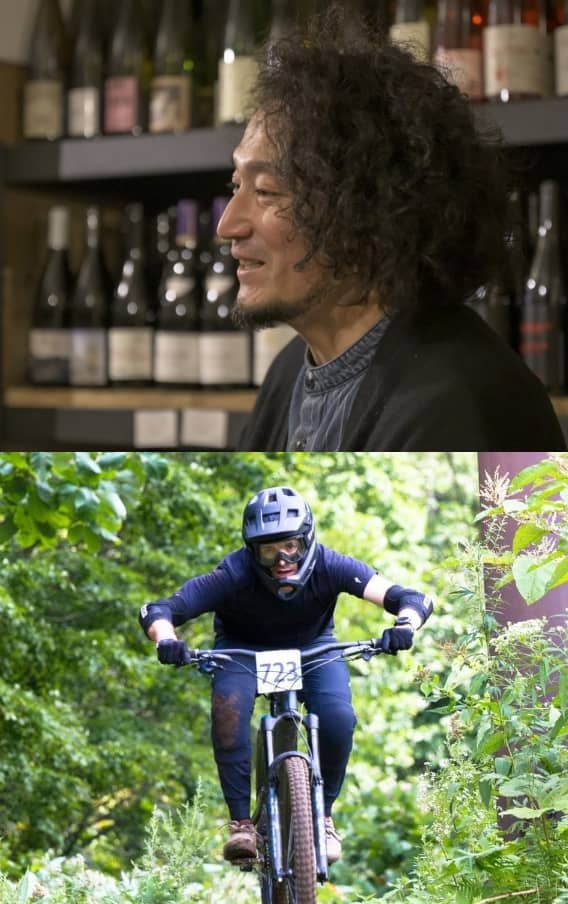
Born in Saitama Prefecture. After graduating from university, he joined a major department store. Having spent his first and second years of university in Bibai City and later transferred to Sapporo City, he has maintained a connection to Hokkaido throughout his life. In 2019, he moved to Niseko with his wife. In 2015, he opened Cave de Bambou on Kirara Street, specializing in natural wines. This March marked its 10th anniversary.

Having had ties to Hokkaido
since my student days,
I opened a wine shop there.

― I heard you have quite a connection to Hokkaido.

My freshman and sophomore years were spent at the university's campus in Bibai City, Hokkaido. My love for Hokkaido was actually one reason I applied to that university.
After graduating, I joined a department store. I was first assigned to the women's clothing section at the Ikebukuro branch, then transferred back to Hokkaido for the Sapporo branch. I requested the transfer and was fortunate to get it. Later, I transferred to the Aichi branch and became the wine specialist in the food section, which was completely different from my previous work.

― So that experience led to Cave de Bambou.

Yes. I was practically a novice who had barely touched wine, yet I had to handle ordering myself. Since it was an area with many wine-loving customers, I found myself studying out of necessity and became hooked on its depth.
I also met my wife during my time at the Sapporo store. We'd talk about wanting to return to Hokkaido someday, but then the Sapporo store closed. We started looking at areas in Hokkaido we were interested in, considering relocation. Niseko was just starting to gain attention back then, and it had a lively energy. We also fell in love with the scenery along Kirara Kaido, where Cave de Bambou is now located, which was a deciding factor.

― Did you open Cave de Bambou right after moving?

I hadn't planned to go independent immediately. I used my liquor license to work at a liquor store in Kutchan Town first, then helped out with vineyard work and retail at Niseko Winery. I started Cave de Bambou in March 2015. By the way, “Bambou” isn't because we use bamboo in the shop; it's just the pronunciation of my surname, Chiku (竹).
Finding this property on Kirara Street was also very fortunate. Being reinforced concrete makes temperature control easy, which is perfect for wine.

A popular spot where people come from
all over seeking natural wine

― What makes natural wine so appealing?

Natural wines are mostly made by grape farmers themselves. At events where you meet producers, big wine companies often send their export managers dressed up in suits and ties, but natural wine makers tend to be more casual—some even show up with dirt still on their hands. When you drink it, you picture the person who made it.
Because they're farmers, many start with a desire to “bottle the flavor of the vineyard” or “express the work of the vineyard.” This fundamental mindset differs from large-scale producers. That's why, instead of adding additives to achieve a polished finish, they naturally gravitate towards winemaking methods using natural yeast to express the vineyard as it is. I believe this leads to the rich individuality and depth of flavor found in natural wines.

― What kind of customers do you see most often?

We get locals, of course, and many people from nearby areas like Sapporo, Muroran, and Tomakomai stop by during drives. During the winter ski season, we see a big jump in international visitors. Some are surprisingly knowledgeable about Hokkaido wines, showing us their phones and asking, “Do you have this one?” seeking out rare local bottles.
As you can see, our selection is so extensive it barely fits in the shop, and some wine lovers tell us they could spend all day here. While many people associate natural wines with being expensive, delicious wines can be affordable too. We want people to enjoy them casually, so we focus on carrying wines priced around ¥2,500 to ¥3,500.

― Could you recommend a wine for summer?

How about “obirame tonoto” from Rankoshi Ito Farm in Karisato, Rankoshi Town, right next to Niseko? It's a lightly sparkling wine released only in summer each year, featuring a refreshing taste with the distinctive acidity typical of cool-climate regions. Located south of the Niseko mountain range, Kamisato is gaining attention as a prime wine-growing area. Despite its high elevation and cold temperatures, it rarely experiences frost.
Ito Farm is a winery where I help with harvests and have become friends with. I even got to name their slightly unusual wine “Obirame Tonoto.” “Obirame” comes from the Ainu word for “Ito” (Japanese huchen), a fish found in the Shiribetsu River flowing through Rankoshi Town, and also connects to the producer's name, “Ito Farm.” ‘Tonoto’ means “alcohol” in Ainu.

Friends I met in Niseko
who make delicious food

― How is life in Niseko, Hokkaido, the place you’ve always wanted to live?

Thankfully, the shop has been busy, so I haven’t been able to go snowboarding much, which is my hobby. But I find happiness in the little things each day. June is especially my favorite season. Vibrant green spreads from the plains and foothills, while snow lingers near the mountain peaks. The contrast of green and white creates a beautiful landscape unique to that time of year.
The Kirara Kaido road in front of the shop has always been a favorite spot of mine. When I return from Sapporo at night after work, the streetlights illuminating the road welcome me home, and it’s a comforting feeling.

― Where would you take friends visiting Niseko?

I have many friends who make delicious things through my work, so I’d definitely want to take them on a gourmet tour around Niseko. First, sightseeing at Lake Toya, then enjoying the exquisite soft serve at Cheese Factory Takara, followed by buying flavorful bread baked in the wood-fired oven at Soke Shu Bakery. For lunch, I recommend the sandwiches at Yamakage Parlor.
Both Cheese Factory Takara and Sōkesh Bakery supply Cave de Bambou. Before the busy seasons in spring and winter, we hold BBQs that double as kickoff meetings. We also collaborate with nearby restaurants for events. That’s one of Niseko’s charms—it’s easy for locals and newcomers alike to build friendships, both professionally and personally.

Contact

Cave de Bambou
113-2 Hondori, Niseko-cho, Abuta-gun, Hokkaido
https://cavedebambou.shop/

※This article is based on information available as of April 2025.

People

08

Niseko as a world-
class mountain biking
destination

Miles Zeorlin

Co-founder and Chief Marketing Officer, NAMBA /
Sales Department, Niseko Real Estate Co., Ltd.

Discover life in nature

Scroll

Interviewee Profile

Miles Zeorlin

Co-founder and Chief Marketing Officer, NAMBA / Sales Department, Niseko Real Estate Co., Ltd.

Originally from Texas. After graduating college, I moved to Sapporo, Hokkaido, wanting to live overseas. A year later, seeking proximity to ski resorts and nature, I relocated to Niseko. While working for a local real estate company, I also served as a founding member of NAMBA.

To Japan, which has been a familiar
presence since childhood

― Where did you move to Niseko from?

I spent my entire life up until college in Texas. After graduating, I wanted to live overseas at least once, so I started my life in Japan working at an international school in Sapporo.
A year later, seeking a more nature-filled environment, I moved to Niseko. Initially, it was supposed to be just a one-year stay before going to graduate school, but this year marks my eighth year since moving to Japan.

― With so many options, why did you choose Hokkaido, Japan?

Japan always felt somewhat familiar to me since childhood, partly because my father ran a Japanese-style pottery studio. That said, my first visit was during summer break between my sophomore and junior years of college. I traveled through Tokyo, Kyoto, Hiroshima, and Matsue on an international program.
Back then, I mainly visited shrines and museums to learn about Japanese culture and philosophy. When I mentioned I’d loved the outdoors since childhood, someone told me, “Then Hokkaido is the place for you.” I first learned about Niseko through ski videos. Before living in Sapporo, I didn’t know much about it, but watching videos of people skiing powder snow made me think, “Wow, a place like this exists!” and my fascination grew.

― How did NAMBA (Niseko Area Mountain Bike Association) come to be established?

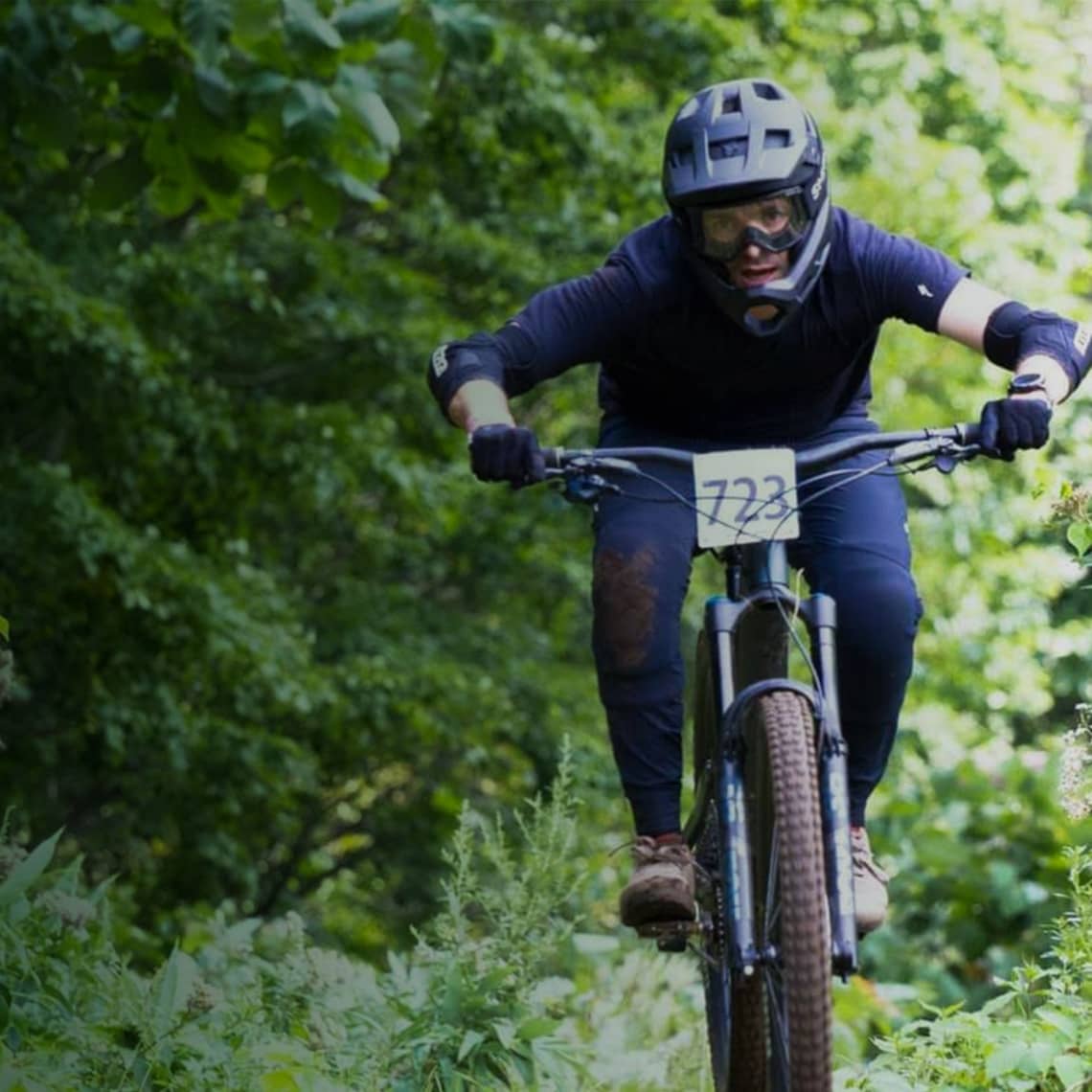
The COVID-19 pandemic, which made traveling overseas impossible, was the catalyst. People who had previously ridden mountain bikes (MTB) abroad heard rumors that Niseko was the place to be in Japan and started gathering here from nearby areas like Honshu and Sapporo. People like me who were already enjoying MTB in Niseko, newcomers, and others joined the growing field, forming a community.
Back then, Niseko was just starting to develop dedicated MTB trails. Discussions like “We want more trails!” led to ideas: “We could build on so-and-so’s land,” “Free access is best for growing the MTB culture,” and so on. Gradually, a direction emerged, and NAMBA was established as the core organization for these activities.

In a few years,
it will be the center
of mountain bike culture.

― Please tell us about NAMBA’s activities in detail.

Simply put, we are an NPO dedicated to building trails and community. Supported by partnerships and donations from sponsors, most members volunteer their time.
We aim not only to build trails but also to develop the MTB community and culture, striving to make Niseko the world’s premier MTB destination where mountain bikers from around the globe gather in the coming years. Our first tangible achievement, born from our founding efforts, is Twin Peaks Bike Park (hereafter Twin Peaks), opened in town-owned forest leased from Kutchan Town.

― What kind of trails does Twin Peaks offer?

While MTB trails exist across Japan, the current reality is a shortage of intermediate trails—most cater to either beginners or advanced riders. Ski resorts have courses separated by skill level, allowing riders to progress by choosing trails suited to their ability. MTB should be the same—ideally, there should be trails for every skill level, enabling riders to gradually improve. Twin Peaks offers diverse trails so that all mountain bikers, from beginners to experts, can enjoy themselves.
A bike park of this scale being free is probably a rare model globally. Rent bikes from nearby outdoor facilities, and even first-timers can enjoy it easily. For advanced riders, it’s perfect training.

― I’m also curious about future plans beyond Twin Peaks.

While Twin Peaks was established on town-owned forest land, this area has many other attractive public mountain forests suitable for MTB. Moving forward, we plan to expand the public trail network accessible to everyone, while continuing to value our cooperative relationships with the community.
Building on our experience creating trails at Grand Hirafu, we’re currently conceptualizing a plan to connect all the resorts in Niseko via trails. Wouldn’t it be wonderful to travel between locations using only forest trails, without ever having to go on public roads? Personally, I’d also love to create a dedicated kids’ trail with fun features. If winter is the “ski town,” I believe the day when summer becomes the “mountain bike town” isn’t far off.

― Is the driving force behind your energetic activities simply your own desire to enjoy it?

That was the initial spark, but now, seeing complete strangers enjoying themselves brings me the greatest joy. Honestly, if it were just for us, we probably would have given up long ago. My heart warms when I pass unfamiliar faces while riding Twin Peaks, and I can’t help but grin when I see a car parked at a nearby convenience store with a bike loaded on top.
I feel the MTB community’s energy firsthand, and it’s becoming one of Asia’s premier mountain biking destinations. I get excited just imagining a future where MTB culture spreads from Niseko across Japan, drawing riders from around the world to our slopes.

Refresh yourself
in an environment
surrounded only by nature.

― How has it been moving to Niseko from overseas?

I enjoyed various outdoor sports back in Texas, but having that environment right nearby is the best. The closest ski resort used to take about 15 hours by car, but here I can be on the slopes within minutes. Mountain biking, bouldering, surfing, fishing, hiking—I can head out whenever I feel like it, even before or after work.
I absolutely love Mount Yotei at night. I must have climbed it countless times. The view of the town lights and the star-filled sky from the summit is a breathtaking sight only those who climb it can see. Actually, I injured my knee two years ago and hadn’t been able to go since, but now that it’s finally healed, I can start hiking again. I’m so excited I can hardly wait.

― Where would you take friends visiting Niseko?

I’d definitely take them to Twin Peaks. Even beginners or seniors can enjoy it with eBIKEs. When my 68-year-old dad visited, we rode Twin Peaks together.
Summer has fewer people than winter, so venturing a bit into nature feels like a luxury—it’s just you and the wilderness. Hanging a hammock at my secret spot along the Shiribetsu River, napping to the sounds of birds, wind, and water alone is the ultimate refreshment.

Contact

NAMBA (Niseko Area Mountain Bike Association)
https://namba.ngo/ja/

※This article is based on information available as of April 2025.

Stay

Photo: ©︎aaron_jamieson_

Live your journey,
immersed in nature’s power
and grace as the locals feel it.
A warm, nostalgia lingers in your heart, as the rhythms of daily life unfold.
By the end of your stay, you’ll find yourself already wanting to return.

Stay

01

Experience What
It Would Be like to
Live There

The people of Niseko live in harmony with nature. You will stumble across new discoveries of this area by acting as if you were living among the locals.

Discover life in nature

Scroll

Like a Second Home

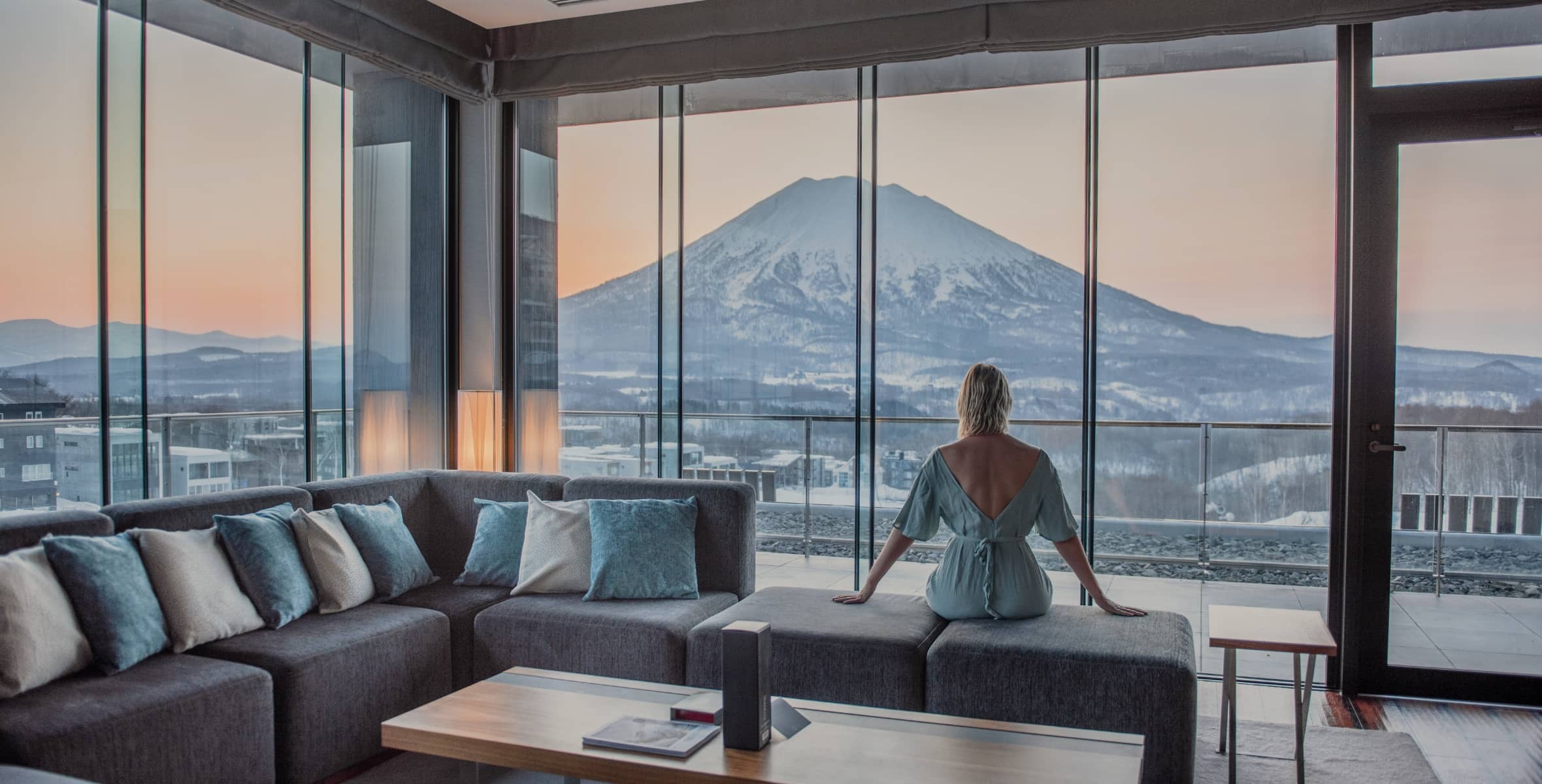
For longer stays, condominiums are a great way to make yourself at home. Having available such conveniences as a full kitchen, furniture and appliances, and a roomy bathroom makes for a stay that feels like your everyday life.

You can choose from a variety of types, including those featuring guest rooms with open-air baths, panoramic views, and stand-alone houses.

It’s All in the Mornings

Mornings give you different scenery from the daytime. On a pleasant morning when the air is crisp, wake up a little earlier than usual and head off to Niseko.

Before breakfast, take a stroll to a viewpoint overlooking Mt. Yotei. If you’re lucky, you may be able to catch its ethereal silhouette wrapped in morning fog

Go for a walk to stretch your legs and have breakfast at a café. At Graubunden, which has a lovely triangular roof, you can order breakfast menu items and signature sandwiches from 8:00 a.m.

Cook with Locally Grown Vegetables

Freshly harvested vegetables are for sale at roadside stations and other farmer’s markets. Making simple dishes using local ingredients in the company of family and friends would likely make for a more memorable experience than even the most luxurious restaurants.

From potatoes and mini tomatoes to corn and beyond, a diverse selection of vegetables are grown here. If you’re unsure what to pick at the farm stand, ask for seasonal recommendations.

Even a simple preparation of these seasonal vegetables richly enhanced by nature itself make for a special treat. Even better, pair them with a local sake.

Immerse Yourself with the Locals
at an Onsen Hot Spring

Niseko is one of Hokkaido’s top hot spring villages and is dotted with hot spring facilities offering day-trip bathing. The variety of spring waters adds to the joy of hot spring hopping.

Kira No Yu

At such hot spring facilities rooted in the community as Kira No Yu, which is surrounded by nature and close to Niseko Station, you can also enjoy socializing with the locals.

Goshiki Onsen

Goshiki Onsen takes its name from the fact that the color of the hot springs changes to five different colors Located at the foot of Niseko Annupuri, these open-air baths offer magnificent views of the mountains.

Stay

02

Savor Local Delicacies
Grown in Nature

Niseko is a treasure trove of ingredients by virtue of being surrounded by mountains and being quite close to the ocean. The gap in temperature between morning and night makes the vegetables sweeter and more savory, and brings in fresh seafood with firm flesh from the Sea of Japan. Have your fill of Niseko’s delicacies at these foodie destinations also popular with the locals.

Discover life in nature

Scroll

Partake in Seasonal Dishes n a Relaxing Space

These are restaurants and cafés to easily familiarize yourself with the tastes of Niseko. Painstakingly prepared dishes using carefully selected ingredients satiate both the palate and the mind.

Sushi Hanayoshi

The owner personally selects the freshest fish from nearby fishing ports and various locations across Hokkaido. The masterful skills of the experienced chefs shine in each sushi, making it a must-try during your stay.

WHITE BIRCH CAFE

This small café in central Niseko Town evokes an atmosphere of being overseas. This café uses local ingredients to make sandwiches and homemade sweets that go well with their home-roasted coffee. Their hamburgers are also popular at lunchtime.

Bringing Out an Ingredients’ Best to
Create New Products

More and more makers are extracting what makes their ingredients appealing and cultivating them from scratch to create original products. Their stylish packaging makes them perfect for souvenirs.

nicao

Niseko’s first Bean-to-Bar Chocolate. Here they innovatively pair carefully selected cacao beans with local ingredients, such as fermented ginger, which is made from ginger and other ingredients by the local ginger beer brand HAKKO GINGER, as well as chili powder made from Niseko-grown chili peppers and sea salt.

Niseko Winery

At the base of Mt. Yotei, Niseko’s only winery delivers a drop unlike any other. Crafted solely with organically grown grapes, Niseko Organic Sparkling Wine, with its rich aroma and delicate bubbles, offers a taste nurtured by nature.

A Delectable Experience
in a Spectacular Location

Discover the incredible taste of freshly squeezed and freshly harvested products amid a magnificent landscape. This is also a great place for families to drop in while on a road trip.

Niseko Takahashi Dairy Farm

Cafés, restaurants, and stores line the expansive grounds adjoined to Niseko Takahashi Dairy Farm. After filling up on sweets made with freshly squeezed milk, you can have your photo taken on the round straw bales.

Niseko Tasty

This location offers a fantastic a view of Mt. Yotei. At this farmer’s market filled with a wide variety of freshly harvested vegetables, you can make your purchases over enjoyable conversation with the farmers. Dried sweet potatoes are one of the farms’ specialties.

Exploring the Beautiful Summer of Hokkaido

Central Hokkaido
Road Trip

Niseko is easily accessible from Sapporo and Otaru.
Enjoy a scenic drive while touring popular tourist spots.

How to Spend
Your Trip

Day1

New Chitose Airport

1 hour drive

Sapporo

1 hour drive

Otaru

Day2

30 minutes drive

Yoichi

1 hour drive

Niseko

Day3

Niseko

1 hour drive

Toya Lake

1 hour drive

Shiraoi

1 hour drive

New Chitose Airport

Scroll

1日目

about 1 hour by car from New Chitose Airport

Sapporo

This northern metropolis features an urban cityscape at its center, while just a short distance away, visitors can enjoy the distinctive natural beauty of Hokkaido. During its pleasant summers, events like the beer garden at Odori Park and others held throughout the city draw large crowds daily.

about 1 hour by car

Otaru

Charming for its beautiful canals and nostalgic streetscape, Otaru offers plenty to enjoy, from food strolls and shopping to scenic canal cruises. Along the walking paths, gas lamps line the streets, creating a magical glow on the water and brick buildings at night.

Day 2

about 30 minutes by car from Otaru

Yoichi

Located at the base of the Shakotan Peninsula, this town is blessed with beautiful seas and nature. It is famous for the Nikka Whisky Yoichi Distillery, but also features numerous wineries, attracting wine enthusiasts. Visitors can also enjoy local seafood and fruit picking, all nurtured by the region’s rich environment.

about 1 hour by car

Niseko

A major resort area lined with accommodations welcoming guests from around the world. Niseko is unique for its abundance of condominiums, allowing visitors to stay in luxurious spaces as if living there. Guests can enjoy various activities, relax in hot springs or open-air cafés, and savor their time embraced by the great outdoors.

Take an aerial stroll on the summer gondola, which ascends all the way to 750 meters above sea level. The panoramic view of Niseko from the summit is sure to become an unforgettable memory. There are walking paths and spacious rest areas where you can relax and enjoy the stunning scenery at your own pace.

Day 3
Niseko

Preparing breakfast with locally sourced ingredients picked up along the drive is a luxury only possible in a room with a kitchen. Outside the window, vibrant greenery sparkles, filling both heart and stomach with a sense of calm. By the time you leave the inn, you’ll feel completely refreshed.

about 1 hour by car

Toya Lake

A caldera lake formed by volcanic activity, it is the third largest in Japan. Even a simple stroll along the lakeshore is soothing, with the clear waters and lush nature creating a serene landscape. During the summer, visitors can disembark on Nakajima Island via the Toya Lake Sightseeing Cruise, and the surrounding hot spring towns are also popular.

about 1 hour by car

Shiraoi

Known as a center for preserving Ainu culture, Upopoy (National Ainu Museum and Park), which opened in 2020, offers a deep insight into its rich history. The area is also a gourmet haven, where visitors can enjoy the bounty of the sea and mountains. Be sure to try Shiraoi beef, a premium Hokkaido brand.

Provided by: Ainu Museum Foundation
(Public Interest Incorporated Foundation)

about 1 hour by car to New Chitose Airport

Activities

An assortment of activities to make your Niseko stay unforgettable.
Ski, hike, jog, and paddle through the great outdoors alongside dear friends
and experienced guides.
Each adventure draws your heart closer to nature.

Photo: ©︎yuuyadayoo / Skier: yuto3146

Activities

01

Indulge
in the Snow’s Charms

The more you go down the powder snow on Niseko’s slopes, the more enchanted you will be by it. Relish in the snow renowned as the best in the world while also enjoying other activities besides skiing/snowboarding.

Discover life in nature

Scroll

Slopes That Make Visitors Want to
Return the Following Year

Of course, to fully savor this powder snow, you cannot miss skiing/snowboarding on it. Enchanted by Niseko United’s wide array of courses and superb snow quality, repeat visitors come back almost every year.

Niseko United

Niseko United, consisting of four ski resorts, is the largest ski resort in Japan where skiers/snowboarders can move around with their skis/snowboards on. Unprecedented within Japan, the Niseko Rules were implemented for backcountry areas.

Niseko Tokyu Grand HIRAFU

Niseko Tokyu Grand HIRAFU offers a wide variety of courses. You can enjoy going downhill through the forest on the Tree Run according to your level as a skier/snowboarder.

Cherished Moments with Family and Friends

The charm of the ski resort isn’t just its many slopes. It’s also the time spent with loved ones after taking off your skis, surrounded by the breath-taking snowscapes.

The fluffy powder snow is gentle when you fall, making it the perfect playground for children. On warmer days, the snow absorbs moisture, making it ideal for building a snowman.

SANSHOKU

At the base of the King Gondola in Niseko Tokyu Grand HIRAFU, the café bar “SANSHOKU” offers a place to enjoy meals and drinks—breakfast, lunch, and après-ski—while taking in the snowy view.

Take a Relaxing Venture Away
from the Hustle and Bustle

Get away from the busy slopes and towns for some trekking through the silvery white forests on snowshoes or horseback. Enjoy feeling like you have been given secret access to nature as you listen carefully for the singing of birds and other signs of animals.

Trek away on guided tours of landscapes distinctly Hokkaido in winter, such as frozen lakes, snow-covered birch forests and evergreen forests.

Horseback Riding

While you may feel uneasy at first, the horses’ rhythmical footsteps on the snow should make you feel more comfortable as you go. It is also refreshing to see the snowy landscapes from this higher vantage point.

Photo: ©︎silvainc

Activities

02

Embrace the Great
Outdoors Surrounded
by a Refreshing Breeze

With its comfortable temperatures, Niseko in summer is perfect for enjoying activities. Let loose and have fun at the mountains, rivers, and lakes of the great outdoors with its pleasant breeze.

Discover life in nature

Photo: ©︎silvainc

Scroll

From Hiking to Full-Fledged
Mountain Climbing

Out of the various mountains surrounding Niseko, first and foremost is Mt. Yotei, which is counted as one of the 100 Famous Japanese Mountains. From casual hiking to full-fledged mountain climbing, you can enjoy mountain hiking on the numerous well-maintained trails that is suited to your level of physical fitness and age.

Mt. Yotei

Mt. Yotei, which is also called “Ezo Fuji” because its cone-shape resembles Mt. Fuji, is a famous mountain that anyone with healthy legs should climb at least once. It is recommended to ask for a mountain guide since some of the paths to the summit can be steep.

The Niseko Trail

The Niseko Trail was officially opened in 2024 after maintenance by the local alpine club. This trail connects the mountains of the Niseko Mountain Range spanning from Hirafuzaka Main Street to the Raiden Coast on the Sea of Japan.

A Brisk Ride Through Greenery

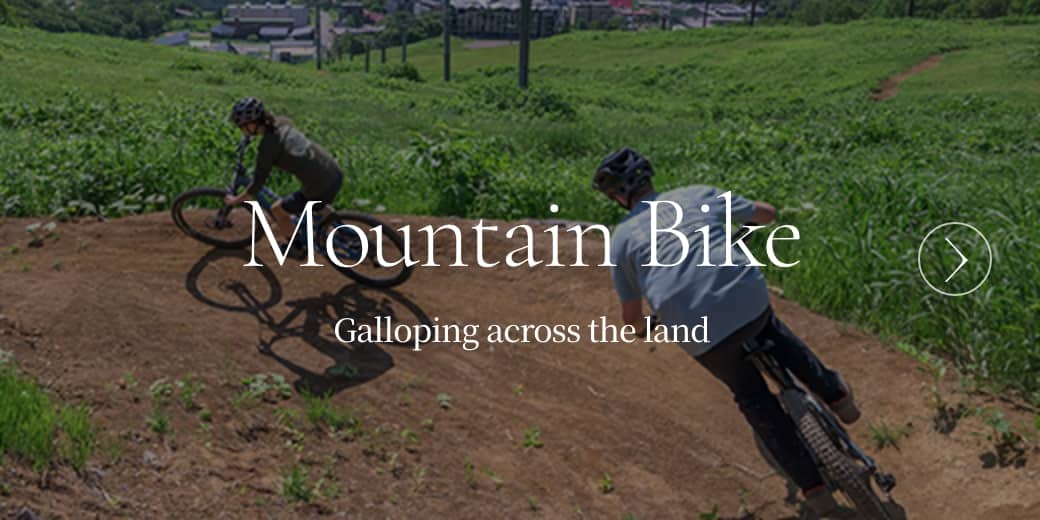
Cyclists flock to Niseko in the summer, drawn by the thrill of riding through stunning natural landscapes. With trails utilizing the natural terrain and ski slopes, the area offers extensive MTB courses. Niseko also hosts numerous road races and cycling events.

Flow Trail

Once the trails of Niseko Tokyu Grand HIRAFU and NAMBA (Niseko Area Mountain Bike Association) are connected, they will form one of the country’s longest trails.

Niseko Classic Race

Since its debut in 2014, the Niseko Classic Race, one of Hokkaido’s largest cycling competitions, has continued to attract more participants each year. Riders from Japan and abroad compete fiercely around the base of Mount Yotei.

Paddling Out onto Crystal Clear Waters

You can also enjoy summer activities that make good use of the abundant and clean water resources. The best part is the refreshing sense of oneness felt as you are led by an experienced guide and paddling out into the great outdoors with your travel companions.

Rafting

In spring, you can take in the thrill of high-level rafting as the melting snow causes the Shiribetsu River’s water level to rise.

Sea ​​Kayak

The Shakotan Peninsula sea kayaking tours have a shuttle service to and from Niseko, making them easy to join. The water is so clear that it feels like you are floating in air.

page top